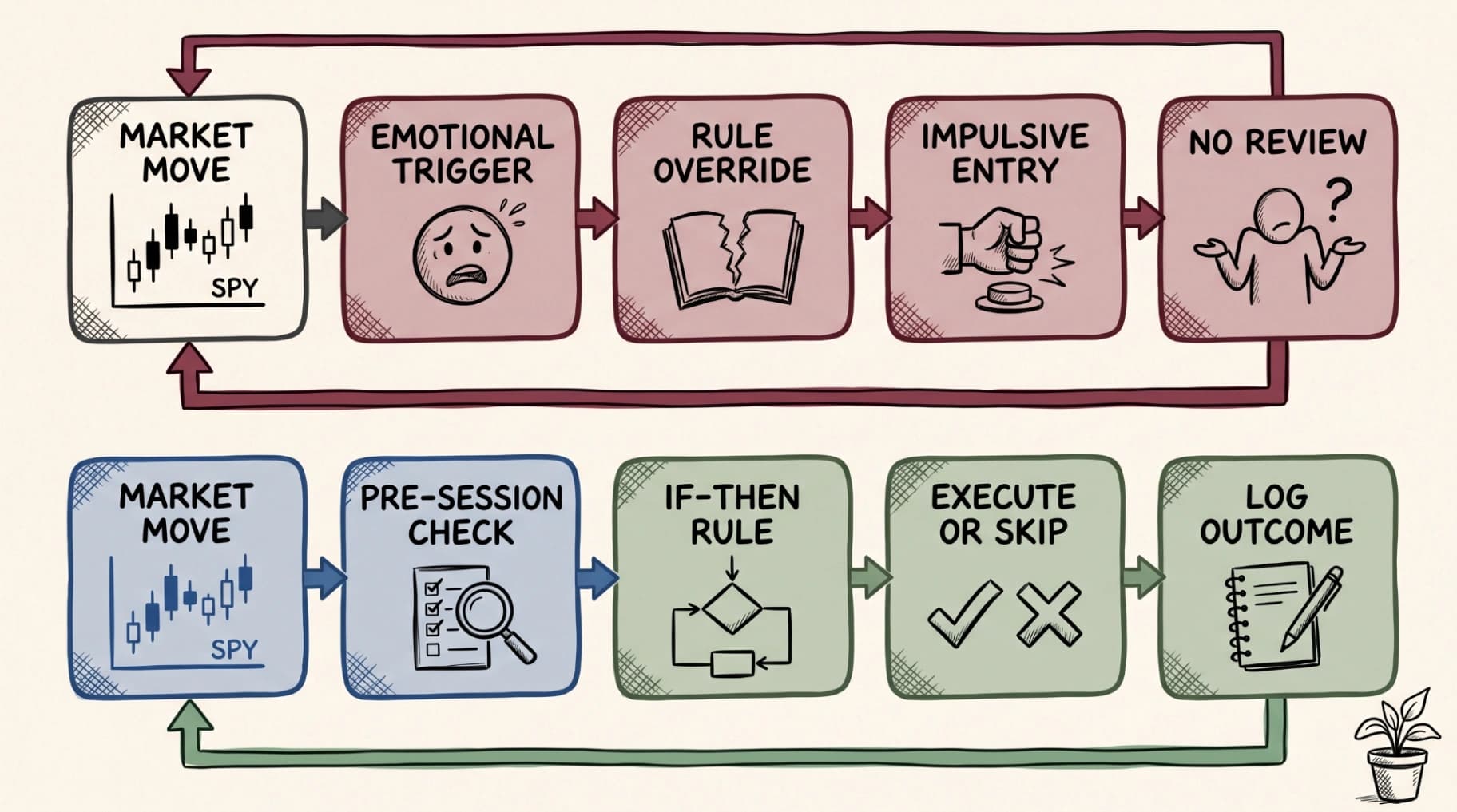
I've had the same conversation with a lot of traders. They tell me their problem is psychology. They know they revenge trade, they know they hold losers too long, they've read the books, they can name the bias while it's happening to them. And it still happens the next week.
That's not a knowledge gap. Understanding a bias and interrupting it in the moment are two completely different skills. Most traders have the first one. Almost nobody builds the second one on purpose. Mindset tools are what close that gap, not by teaching you something new, but by giving you a structure to fall back on when the moment where you'd normally slip is actually happening.
Why Knowing Isn't the Same as Doing
You can read every article on cognitive trading biases and still take the same impulsive entry three days later. Insight fades fast under pressure. The market moves, adrenaline shows up, and whatever you understood calmly at your desk last night is nowhere to be found in the moment you actually need it.
This is why "work on your mindset" is such an unhelpful piece of advice on its own. It points at a real problem without giving you anything to do about it. A mindset tool, in the practical sense, is a small routine or rule that you follow regardless of how you feel in the moment. It removes the decision from a moment when your judgment is least reliable and moves it to a moment when it's most reliable, before the session starts, or after the emotional charge of a trade has passed.
The Difference Between Motivation and a Routine
Motivation is unreliable by design. It's high after a win, low after a loss, and largely absent on an ordinary Tuesday. If your discipline depends on feeling motivated, it will fail exactly when you need it most, which is usually right after something has gone wrong.
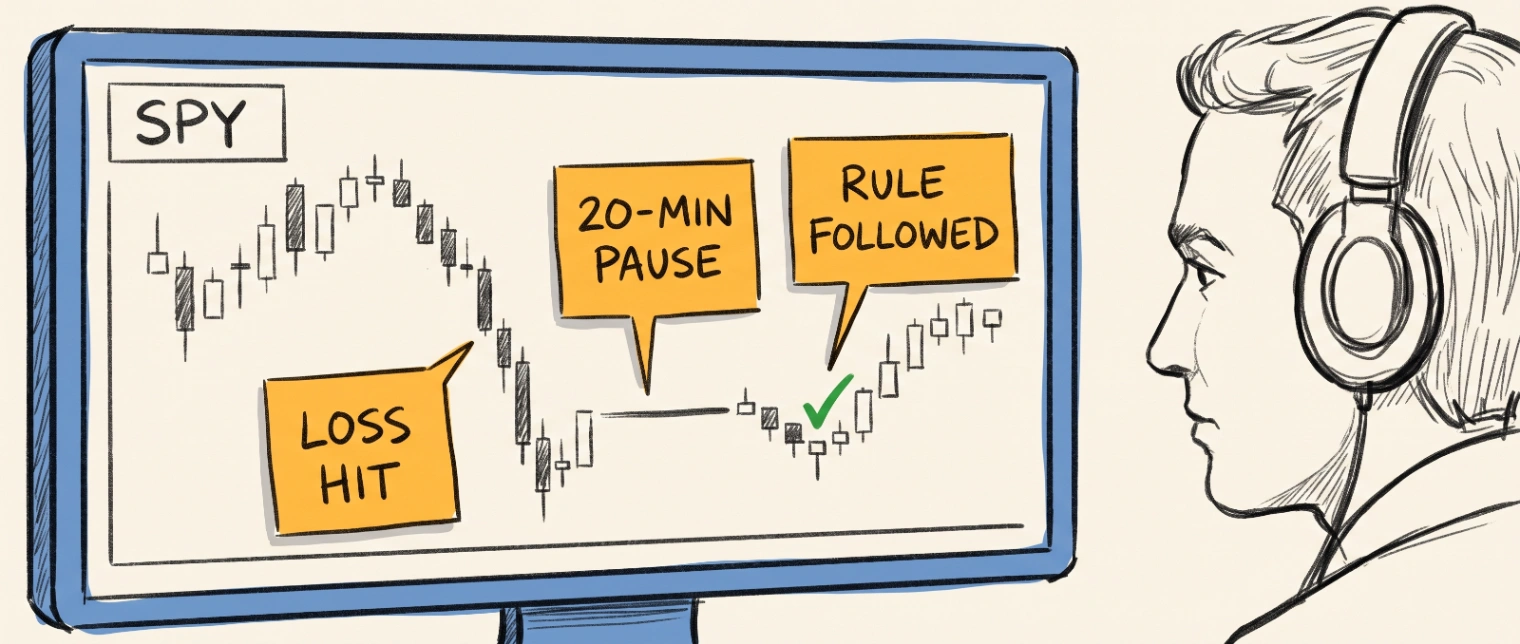
A routine doesn't ask how you feel. It just runs. That's the entire value of building mindset tools around specific triggers instead of general intentions. "I'll stay calm" is an intention. "After two losing trades, I close the platform for twenty minutes" is a routine. Only one of those survives contact with an actual bad session.
Four Mindset Tools Worth Building
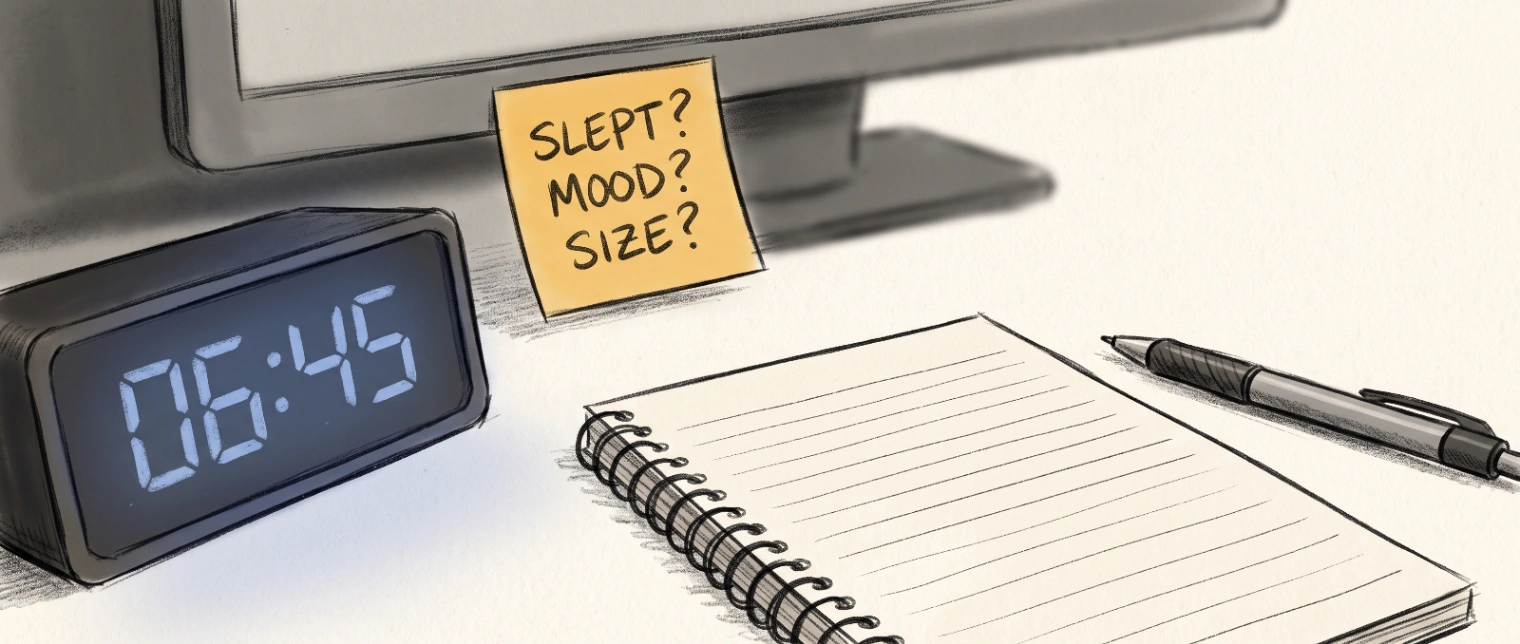
The pre-session reset. Before you look at a single chart, spend two minutes on where your head actually is. Did you sleep. Are you carrying frustration from yesterday. Are you coming off a strong run that's inflated your confidence. This isn't therapy, it's a data point, and it belongs in the same routine as your pre-trade planning, not as an afterthought to it.
The post-loss protocol. Decide in advance what happens after a loss, before you're in one. A fixed pause before the next entry. A hard cap on trades for the day if a certain drawdown is hit. The specific rule matters less than the fact that it's decided ahead of time. This is the single highest-leverage tool against emotional trading, because it takes the decision away from the version of you that's already compromised.
The if-then rule list. Most impulsive decisions happen in situations you've actually seen before. Write down the recurring ones. If price gaps against my position at the open, then I do X, not whatever feels right in the moment. If I've hit my daily loss limit, then the platform closes, no exceptions. A short list of these, reviewed occasionally, removes a surprising number of the decisions that usually go wrong.
The end-of-day debrief. Not a full trade review, just three questions. Did I follow my plan today. Where did I deviate, and why. What's one thing I'll do differently tomorrow. Five minutes, done consistently, builds more self-awareness than an occasional two-hour review session ever will.
Where Journaling Fits
None of these tools work if there's no record of whether you actually used them. This is the part traders skip, not because it's hard, but because it's unglamorous. Writing "followed my post-loss protocol" isn't exciting the way a good trade is. But over weeks, that record is what tells you whether your mindset tools are actually changing your behavior or just sitting in a notes app unused.
This is also where the line between mindset tools and trading psychology tools gets blurry, and that's fine. One is the routine you commit to. The other is the software that shows you, honestly, whether you kept the commitment. You need both. A routine you never measure is just a hope.
How ChartWise Supports a Mindset Practice
ChartWise was built with this gap in mind. Mood and context tags sit right alongside every trade, so your pre-session state and your post-loss decisions become part of the same record as your entries and exits, not a separate habit you have to maintain on the side. Over time, that record answers the question that actually matters: on the days you followed your routine, how did your trading look different from the days you didn't.
That comparison is hard to make from memory. It's straightforward when the data is already sitting next to every trade you've logged. If you want to see how that connects to the broader picture of consistent execution, our piece on trading discipline covers the habits that tend to compound alongside a mindset practice like this one.
Making It Durable
The traders who keep these routines going aren't the ones with the most willpower. They're the ones who made the routine small enough to survive a bad week. A two-minute pre-session check survives. A rigid, elaborate ritual usually doesn't, because the first time you skip it under pressure, it's easy to skip it again.
Start with one tool. The post-loss protocol is usually the highest-leverage place to begin, because it protects you at the exact moment things are most likely to go sideways. Add the others once the first one is automatic. This is the same logic behind trading consistency more broadly: small, repeatable pieces compound, and dramatic overhauls rarely survive the first hard day.
Mindset tools won't make trading feel effortless. That's not the goal. The goal is a set of routines that hold up on the days your judgment can't be trusted, which, if you trade long enough, is going to be more days than you'd like to admit.
FAQ
What are trading mindset tools?
Trading mindset tools are repeatable routines, not techniques you use once, that manage your psychological state around trading. Examples include a pre-session check-in, a fixed protocol for after a loss, and a short end-of-day debrief. They work by moving decisions to a calmer moment instead of relying on discipline in the heat of a trade.
How are mindset tools different from trading psychology tools?
Mindset tools are the routines and rules you commit to. Trading psychology tools are typically software features that analyze your trade data to show whether those routines are actually changing your behavior. One is the practice, the other is the measurement.
What's the easiest mindset tool to start with?
The post-loss protocol tends to have the most immediate impact, since it protects the exact moment where impulsive decisions are most likely. A simple rule, like a fixed pause or a daily loss cap decided in advance, removes the decision from a moment when judgment is least reliable.
Do I need software to build a trading mindset practice?
No. A notebook and a consistent habit work. Software becomes useful once you want to see whether the routine is actually correlating with better outcomes over time, which is harder to track accurately by memory alone.
How long does it take for a mindset routine to become automatic?
It varies, but most traders find that a small, consistent routine, kept to a few minutes, becomes close to automatic within a few weeks. Elaborate routines tend to fall apart much sooner, usually the first time a stressful session makes them feel optional.