Why Your Brain Isn't Built for Trading
Your brain didn't evolve to read candlesticks. It evolved to make fast decisions with incomplete information, mostly to keep you alive. That same wiring now runs your trading account, and it's not a great fit. Cognitive biases are the shortcuts your mind takes when it's under pressure, and the market is basically a machine for creating that pressure on a loop.
The tricky part is that these biases don't feel like mistakes while they're happening. They feel like conviction. A gut read that turns out to be nothing more than your brain protecting an idea it already liked. Once you can name a few of the most common ones, you start noticing them in your own trade history, and that's usually the moment things start to change.
Confirmation Bias: Trading the Story You Already Believe
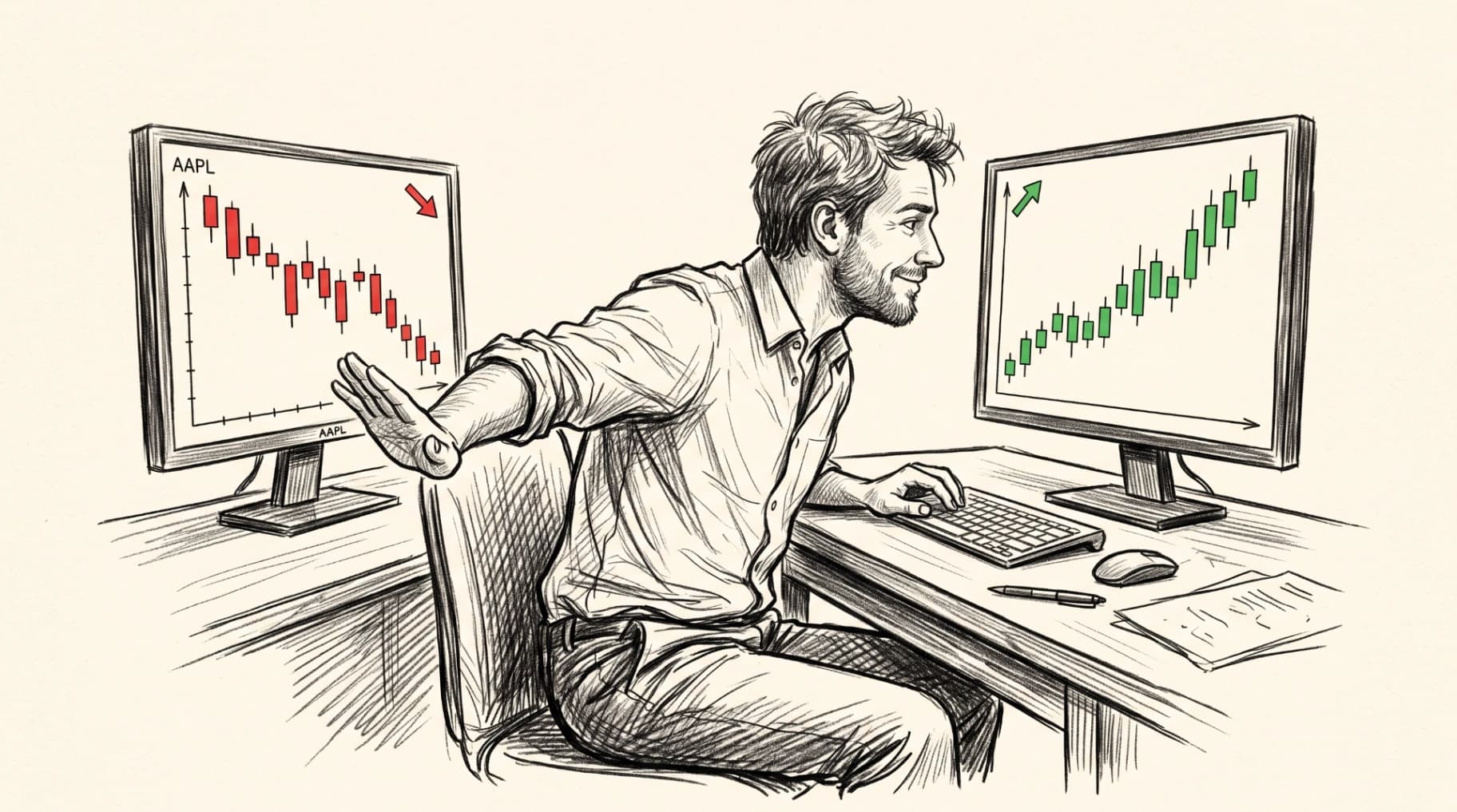
You form a thesis on a ticker. Maybe you're bullish on AAPL heading into earnings. From that point on, your brain quietly starts filtering everything you see. Bullish headlines get your full attention. Bearish ones get skimmed or dismissed as noise. You're not lying to yourself on purpose, you're just running a search that was rigged from the start.
This is confirmation bias, and it's arguably the most expensive one for traders because it doesn't just affect entries. It keeps you in losing positions too. Once you're in a trade, every piece of information gets filtered through "am I right" instead of "what does this actually show." The fix isn't willpower. It's structure. Before entering a trade, write down what would prove the idea wrong, not just what would prove it right. If you can't name an invalidation point, that's usually confirmation bias talking.
Anchoring Bias: The Price You Can't Let Go Of
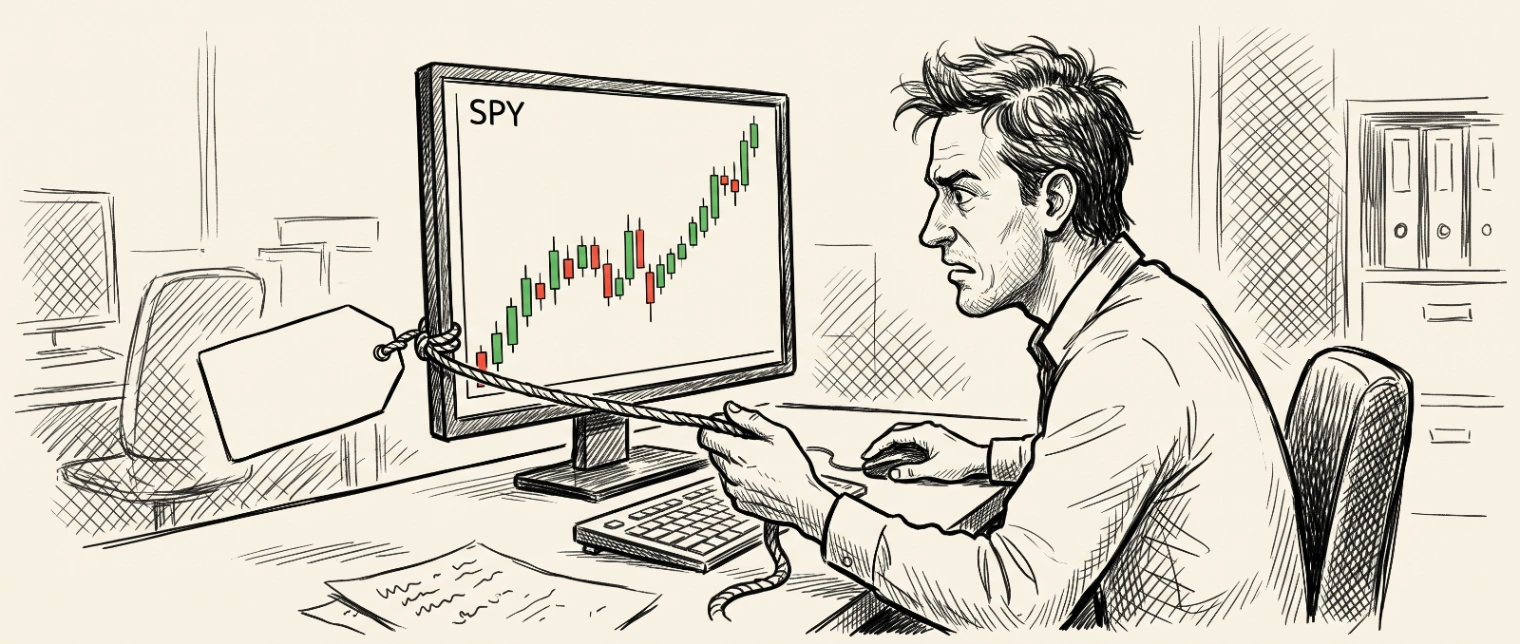
Anchoring shows up the moment a number gets stuck in your head and refuses to update. You bought SPY at a certain level, and now every decision gets measured against that price instead of what the chart is actually doing right now. "I'll sell once it gets back to where I bought it" sounds like a plan, but it's really just an anchor dressed up as strategy.
The market has no memory of your entry price. It doesn't know or care what you paid. Anchoring bias convinces you that a specific number carries meaning it never actually had. One practical way to loosen an anchor is to ask, "If I didn't already hold this position, would I buy it right now at this price?" If the honest answer is no, the anchor is doing the deciding, not you.
Recency Bias: When Last Week Becomes the Whole Truth
Recency bias is what happens when your last few trades start writing the rules for your next one. A hot streak makes every setup look obvious. A rough week makes you doubt a strategy that's worked for months. Either way, a small, recent sample is quietly overriding a much larger, more reliable one.
This is where a short memory becomes genuinely dangerous. Three good trades on EUR/USD breakouts doesn't mean the strategy suddenly improved, and three bad ones don't mean it's broken. Zooming out to a full data set, not just the last handful of trades, is the only real defense here. This is one of the clearest reasons a structured history of your trades matters more than your memory of them.
Loss Aversion: Why Losses Hurt Twice as Much
Loss aversion is simple to describe and brutal to live with. Losing a dollar feels worse than gaining a dollar feels good, by a wide margin. That imbalance quietly shapes trading behavior in two opposite, equally damaging ways: cutting winners early because the fear of giving profit back feels unbearable, and holding losers far too long because closing the trade makes the loss "official."
Neither behavior comes from a lack of strategy. Both come from an emotional reflex that has nothing to do with the chart in front of you. Predefined exits, set before the trade is live and not renegotiated mid-trade, are the most direct way to take loss aversion out of the decision. The rule gets made when you're calm, not when you're staring at a red number.
Overconfidence Bias: The Cost of a Good Streak
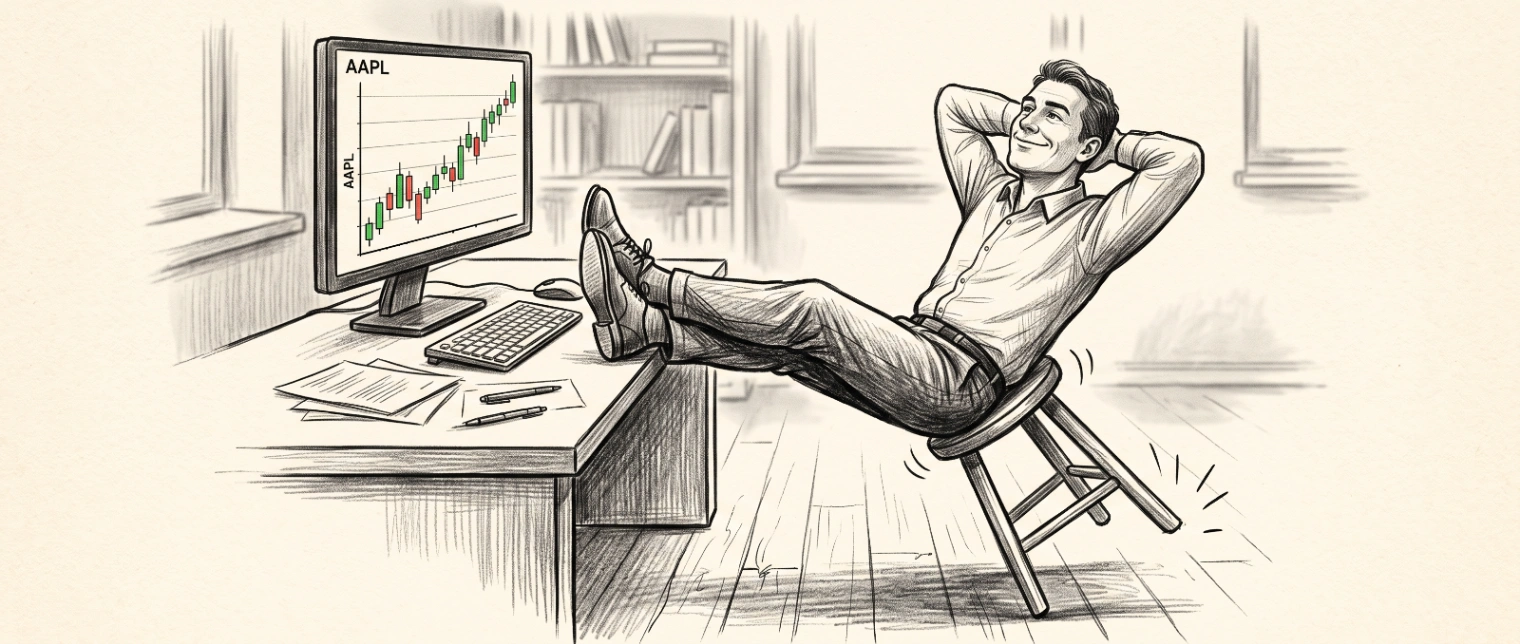
A winning streak feels like proof you've figured something out. Sometimes that's true. Often, it's variance wearing a costume. Overconfidence bias creeps in when good results start feeling like a personal quality instead of a possible outcome of a sound process, and the usual result is bigger size, looser rules, and a much smaller margin for error right when you can least afford it.
The traders who avoid this trap tend to separate the outcome of a trade from the quality of the decision that led to it. A losing trade taken correctly is still a good trade. A winning trade taken outside your rules is still a warning sign, even if it worked out this time. That distinction is hard to hold onto from memory alone, which is exactly why it needs to live somewhere outside your head.
How to Catch Bias Before It Costs You
None of these biases announce themselves. They show up disguised as intuition, and intuition is very convincing in the moment. The traders who manage bias well aren't the ones who've eliminated it. Nobody does. They're the ones who've built a habit of checking their own reasoning against something outside their own head, usually a written plan or a logged history of how similar setups actually played out.
A few checks worth running before every trade: Can you name what would prove this idea wrong? Is this decision based on where price is now, or where it used to be? Is this the trade in front of you, or a reaction to your last few trades? If you're not sure, that uncertainty is worth sitting with for another minute before you click anything.
Turning Awareness Into a System
Knowing the names of these biases is a start, but it doesn't do much on its own. What actually changes behavior is seeing your own biases in your own data, over and over, until the pattern is impossible to ignore. That's the real value of logging trades with context, not just entries and exits, but the reasoning, the emotional state, and the setup behind each one.
Over time, a well-kept log turns vague self-suspicion ("I think I chase breakouts when I'm behind for the week") into something concrete you can actually see and correct. This is part of why behavioral patterns matter as much as technical setups, and why tools built around trading discipline focus so heavily on context, not just outcomes. If you want to build these habits without risking real capital, a paper trading journal is a low-stakes place to start noticing your own patterns.
Bias isn't something you defeat once and move past. It's a permanent feature of having a human brain in a market that constantly tests it. The traders who handle it best have simply stopped relying on memory and started relying on a system, whether that's a written checklist, a tagged journal, or AI trading software that flags the patterns before they turn into another repeated mistake.
FAQ
What is a cognitive bias in trading?
A cognitive bias in trading is a mental shortcut that distorts how a trader interprets information or makes decisions, often without the trader realizing it's happening. These shortcuts evolved to help humans make fast decisions in everyday life, but they frequently lead to costly errors in a data-driven environment like the market.
What is the most common cognitive bias among traders?
Confirmation bias is widely considered the most common, since it affects nearly every stage of a trade. It leads traders to seek out information that supports a position they already hold while dismissing or downplaying evidence that contradicts it.
Can cognitive biases in trading actually be fixed?
Biases can't be permanently eliminated because they're built into how the brain processes information under uncertainty. What traders can do is build systems, like written rules, invalidation criteria, and detailed trade logs, that catch biased decisions before they turn into costly mistakes.
How does journaling help with trading psychology?
A detailed trading journal creates an outside record of decisions and reasoning that isn't distorted by memory or emotion in the moment. Reviewing that record over time makes recurring biases visible in a way that's much harder to see from inside a single trade.