There's a specific kind of hope that comes with downloading predictive trading software for the first time.
You've read the landing page. AI-powered. Machine learning. Predictive insights. Somewhere in your head, a quiet voice says maybe this is the thing that finally sees around the corner before you do. Maybe it catches the reversal before it happens. Maybe it tells you, in advance, which way this is going to break.
Then you use it for a few weeks.
The signals show up. Some hit. Some don't. Your results look roughly the same as before, except now you're also paying a subscription and second-guessing a tool instead of just second-guessing yourself.
That gap between the promise and the outcome is worth slowing down on, because it points to something most marketing copy skips over entirely: what these tools are actually predicting, and what they were never going to be able to predict in the first place.
What "Predictive" Actually Means in Most Trading Tools
Most software that calls itself predictive is trying to forecast the market. Price direction. Momentum shifts. Probability of a breakout continuing. Under the hood, these systems are trained on historical price data, volume, and sometimes sentiment, looking for statistical patterns that have preceded certain moves in the past.
That's a legitimate field of research. It's also an extremely difficult one. Markets are noisy, adaptive, and influenced by participants who are themselves reacting to the same signals the model is trained on. A pattern that worked reliably last year can quietly stop working the moment enough traders start acting on it. This is part of why even well-built market-prediction models tend to show modest, inconsistent edges rather than dependable foresight.
None of that means the research is worthless. It means the framing sold to retail traders, that a piece of software can hand you tomorrow's move today, is doing more marketing than the underlying math can support.
So if market prediction is the shakiest part of "predictive trading software," what's the sturdier part?
The Prediction Nobody Talks About: You
Here's the version of prediction that actually holds up: forecasting your own next move, not the market's.
Your trading history is a dataset. Every entry, every exit, every setup you took and skipped, every trade you closed early out of nerves, all of it is evidence of how you behave under specific conditions. That evidence is far more consistent than price action, because you are more consistent than the market.
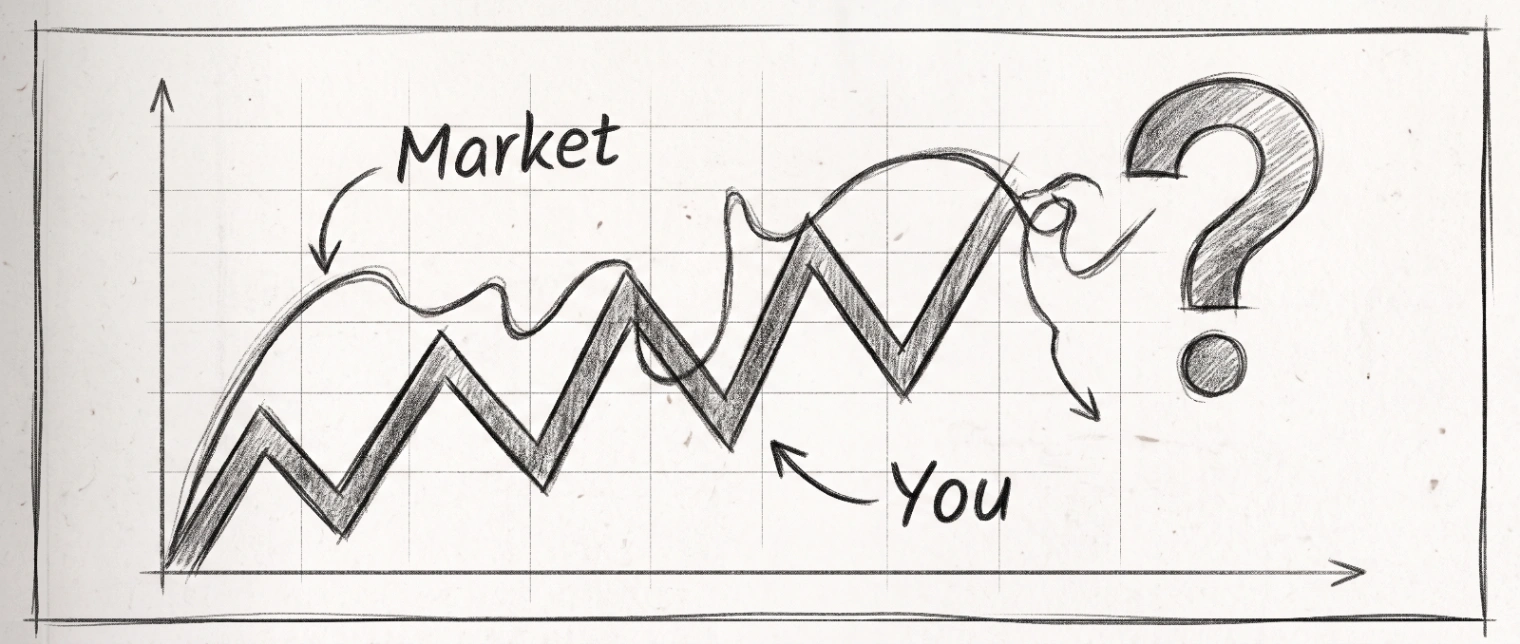
People tend to repeat the same decisions in the same circumstances, especially under stress, long after they've consciously decided to stop.
That consistency is what makes personal, behavior-based prediction so much more reliable than market prediction. If your data shows you tend to widen your stop after two losing trades in a row, that's not a maybe. That's a documented pattern, and once you can see it, you can plan around it before it happens again, the same way traders learn to spot high-quality setups instead of reacting to every shape that resembles one.
This is the quieter, less flashy version of "predictive." It won't tell you where SPY closes on Friday. It will tell you, with real accuracy, what you're likely to do the next time a trade goes against you at 2pm on a Thursday, which is arguably more useful information.
Building a Model Out of Your Own Trades
You don't need machine learning infrastructure to start building this kind of prediction. You need consistent data.
A few inputs matter more than the rest:
The setup or pattern you were trading, logged the same way every time
What the market context looked like around the entry, not just the entry price
Your emotional state going in, whether that's confidence, frustration, boredom, or urgency
How the trade actually played out relative to your original plan, not your adjusted one
Most traders have pieces of this scattered across screenshots, memory, and the occasional spreadsheet row. That scattering is exactly why the predictions never form. A model, even a simple one built by a human reviewing their own history, needs enough clean, comparable data points before a pattern becomes visible instead of anecdotal.
This is also where pattern awareness tends to show up first, not in the trades themselves, but in the behavior surrounding them. Traders often discover they're not reacting to information, they're reacting instead of deciding and calling it a setup.
Where Chartwise Fits In
This is the exact gap Chartwise is built around.
Instead of trying to forecast where price goes next, Chartwise applies AI to the dataset you actually control, your own trading history. It looks at your entries, exits, setups, and journal notes, and surfaces the patterns you're too close to see on your own: which setups you're consistently early on, which market conditions correlate with your best decision-making, and which situations tend to pull you off your plan.
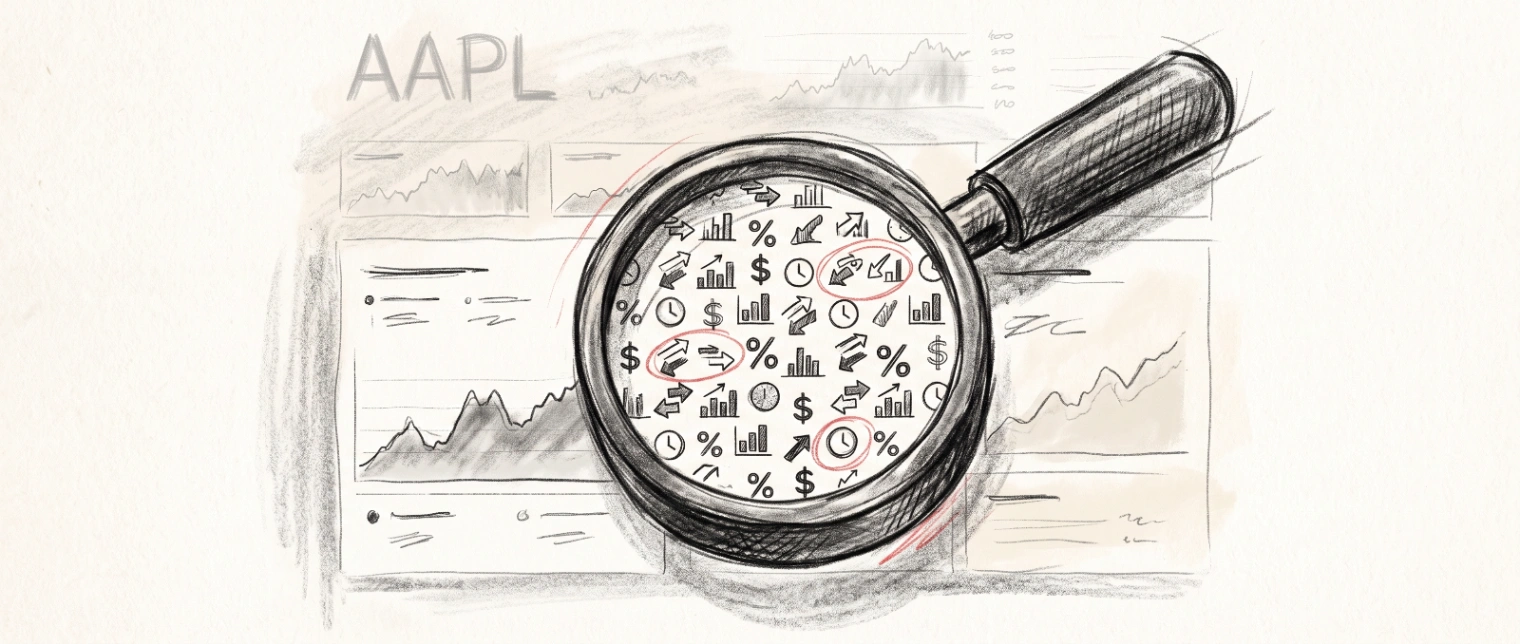
That's a fundamentally different kind of prediction than "the market will go up." It's closer to: based on the last forty times you traded this setup after a losing morning, here's what usually happened next. That's a forecast you can actually act on, because it's describing a pattern you're capable of changing.
The AI Trade Assistant makes this conversational rather than something you have to dig for. You can ask it directly which of your setups perform best in which conditions, or where your risk-to-reward tends to drift from plan to execution, and get an answer built from your own data instead of a generic rule someone else wrote for a different trader entirely.
The Difference Between Forecasting the Market and Forecasting Yourself
Predictive trading software isn't a bad idea. It's just aimed at the wrong target most of the time.
Markets are genuinely hard to forecast, and any tool promising certainty there is overselling what the underlying models can actually do. Your own behavior, on the other hand, is a pattern that's been forming for as long as you've been trading, and it's sitting in your trade history right now, waiting to be looked at honestly instead of reviewed only when you're tired, rushed, or overconfident.
The traders who improve fastest aren't the ones who found a model that calls the next candle. They're the ones who stopped trying to predict the market and started studying themselves instead of just recording trades, then used that prediction to close the gap between the trader they think they are and the one their data shows.
That's not a smaller kind of edge. It's just a quieter one, and it's the only kind that gets more accurate the longer you keep showing up for it.
FAQ
Can predictive trading software actually predict the market?
Most tools that claim to predict market direction are working with genuinely difficult data. Price movement is influenced by countless factors and reacting participants, so even well-designed models tend to produce modest, inconsistent edges rather than reliable forecasts. Treat market-prediction claims with healthy skepticism.
What data does predictive trading analytics actually use?
It depends on the tool. Market-focused platforms typically use price, volume, and sentiment data. Behavior-focused platforms, like a trading journal with AI analysis, use your own entries, exits, setups, and notes to identify patterns in how you trade.
Is AI trading software worth it for retail traders?
It depends on what it's being used for. AI applied to your own trading history, spotting behavioral patterns, setup performance, and risk drift, tends to be far more actionable than AI aimed at forecasting price movement, since your own patterns are more consistent and easier to verify.
How is Chartwise different from market-prediction tools?
Chartwise isn't trying to forecast where the market goes next. It applies AI to your own trade history to surface patterns in your setups, behavior, and decision-making, so the insights are specific to how you actually trade.