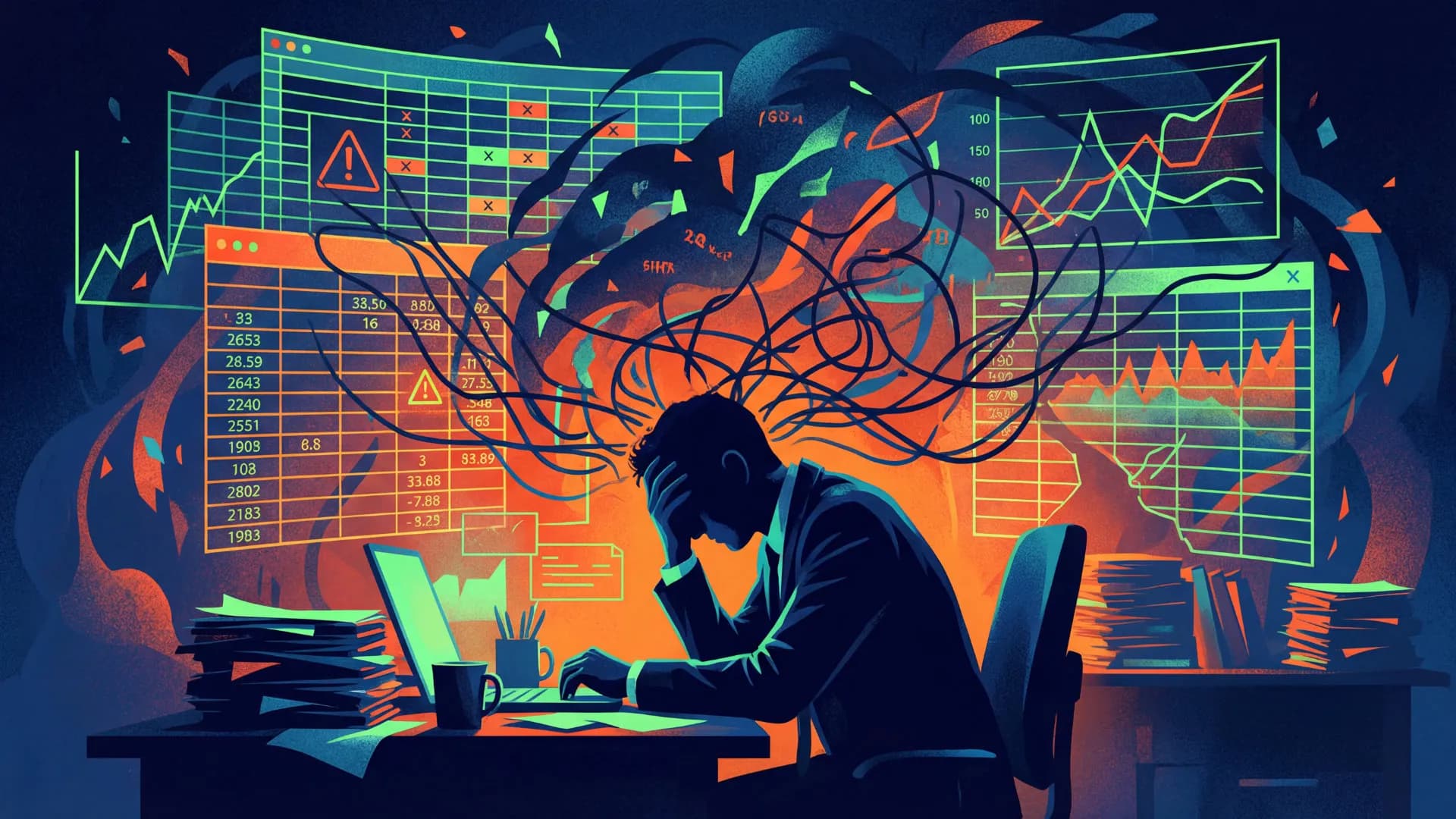
I’ve met a lot of traders over the years who can read a chart better than they can read themselves. They know every indicator, every pattern, every setup. Yet their results are all over the place.
When you dig a little deeper, the problem usually isn’t the strategy. It’s awareness.
Most traders don’t lose money because they’re clueless. They lose money because they repeat the same behaviors without realizing it. Overtrading after a loss. Hesitating on good setups. Getting aggressive when bored. None of that shows up clearly on a chart.
This is where journaling comes in. And this is also where many traders get stuck, especially when comparing trading journal software vs Excel.
The Spreadsheet Phase Everyone Goes Through
Almost every trader starts with a spreadsheet. I did too.
At the beginning, it feels like the responsible thing to do. You log entries, exits, position size, risk-reward, P&L. You tell yourself, “If I track everything properly, the answers will show up.”
For a while, it works. You feel organized. You feel disciplined. You feel like a professional.
Then real trading life kicks in.
You take three trades in a choppy session. One loss turns into two. You close the platform feeling frustrated. The last thing you want to do is open Excel and type numbers into neat little cells.
So you skip it. Or you log it later. Or you only log the trades you’re proud of.
And just like that, the spreadsheet starts lying to you.
Where Spreadsheets Quietly Break Down
The first issue is friction. Manual journaling sounds simple until you’re actually trading. When emotions are high and focus is low, extra steps get skipped. That’s human nature, not laziness.
The second issue is that spreadsheets only show outcomes, not decisions.
A spreadsheet can tell you that you lost money on a trade. It can’t tell you that you entered early because you were afraid of missing the move. It can’t show that you sized up because you wanted to make back a loss quickly. It can’t capture hesitation, doubt, or overconfidence.
Those details matter more than most traders think, especially once they begin to ditch spreadsheets and look for deeper insight.
The third issue is timing. Most traders review spreadsheets days or weeks later. By then, the emotional context is gone. You’re analyzing trades with a calm mind that didn’t exist when the trade was placed. The lesson loses its bite.
That’s how mistakes survive longer than they should.

Trading Isn’t a Data Problem; It’s a Behavior Problem
Here’s something I tell traders all the time: if profitability were only about data, the best spreadsheet builders would be the best traders.
They aren’t.
Trading is a performance skill. Just like sports or music, execution under pressure matters more than theory. Two traders can trade the same setup with the same rules and get very different results.
One follows the plan calmly.
The other breaks it at the worst possible moment.
That difference doesn’t show up in a spreadsheet formula, no matter how advanced your trader productivity tools are.
Why Smart Journals Feel Different
Smart trading journals approach the problem from the trader’s side, not the accountant’s side.
Instead of asking you to remember everything later, they help you capture context while it’s still fresh. Trades are synced automatically. Charts are attached. Metrics are calculated without effort.
More importantly, they encourage reflection in real time.
You can note how you felt before the trade. Whether you followed the plan. What you were reacting to. A quick screenshot can tell a story that numbers never will.
This small shift changes the entire learning process and is why many traders move toward modern trader tools.
The Power of Seeing Patterns Early
One of the biggest breakthroughs traders experience with smart journals is pattern awareness.
Not chart patterns. Behavioral patterns.
You start noticing things like
You overtrade after two losses in a row
You take lower-quality setups late in the session
You perform better when you wait for confirmation
Your worst trades happen when you feel rushed
These insights don’t require complex math. They require honest observation.
And once you see them clearly, they’re hard to ignore, especially when supported by built-in trading analytics software.
Feedback Is What Builds Consistency
Spreadsheets give you records. Smart journals give you feedback.
That feedback loop is what helps traders improve faster. You trade, you review soon after, and you make small adjustments while the memory is still alive.
Over time, trading feels less chaotic. You stop guessing why your equity curve looks the way it does. You can connect results to decisions, not just entries and exits.
That clarity builds confidence. And confident traders tend to follow their rules more consistently, aided by better trading dashboard clarity.
More Columns Won’t Fix Discipline
I’ve seen traders add endless columns to their spreadsheets hoping clarity will magically appear. More metrics. More ratios. More calculations.
It rarely helps.
Too much data without context leads to overthinking. You end up analyzing instead of improving. Numbers alone don’t tell you what to change tomorrow.
Smart journals focus your attention on what actually moves the needle. Repeated mistakes. Emotional triggers. Execution flaws. Those are the real leverage points.
When Spreadsheets Still Make Sense
To be fair, spreadsheets aren’t useless.
If you trade very infrequently or just want a basic performance summary, they’re fine. They’re also useful for high-level reviews and custom analysis if you enjoy working with raw data.
But once you’re trading regularly, behavior becomes the dominant factor. And that’s where spreadsheets struggle to keep up.

The Shift Every Serious Trader Makes
There’s a moment most serious traders experience. The strategy looks solid. The market isn’t doing anything crazy. Yet results stay inconsistent.
That’s usually when the focus turns inward.
Instead of asking, “What’s wrong with my setup?” the question becomes, “What am I doing differently on my bad days?”
Smart journals accelerate that realization. They turn journaling from a chore into a mirror. Not a harsh one. Just an honest one.
You stop obsessing over single trades and start improving how you trade.
Where Chartwise Fits Into This Picture
This is where a tool like Chartwise makes sense for many traders.
Chartwise brings trade data and chart context together in one place, which removes a lot of friction from the review process. Instead of jumping between platforms or putting reviews off, you can quickly see what you traded, what you saw, and how it played out.
What makes Chartwise useful is that it supports thinking rather than replacing it. Chartwise helps surface patterns, clarify decisions, and make reviews less overwhelming. On days when motivation is low, Chartwise often makes the difference between skipping a review and doing a quick, honest check-in.
Used consistently, Chartwise helps traders stay connected to their process, not just their P&L.
The Big Picture
So What Actually Makes You Profitable?
Spreadsheets help you record trades. Smart journals help you understand yourself.
Profitability isn’t about perfect data. It’s about awareness, discipline, and repetition over time. If your journaling system doesn’t help you see why you act the way you do under pressure, it’s only doing half the job.
And in trading, half the job usually isn’t enough.
Most traders don’t fail because they’re lazy or unintelligent. They fail because they never build a clear feedback loop between their decisions and their results.
Spreadsheets are a starting point. Smart journals are a step forward.
Not because they’re fancy.
But because they’re honest.
And in trading, honesty is one of the few real edges you can build.