The Market That Never Gives You Time to Think
Crypto doesn't close.
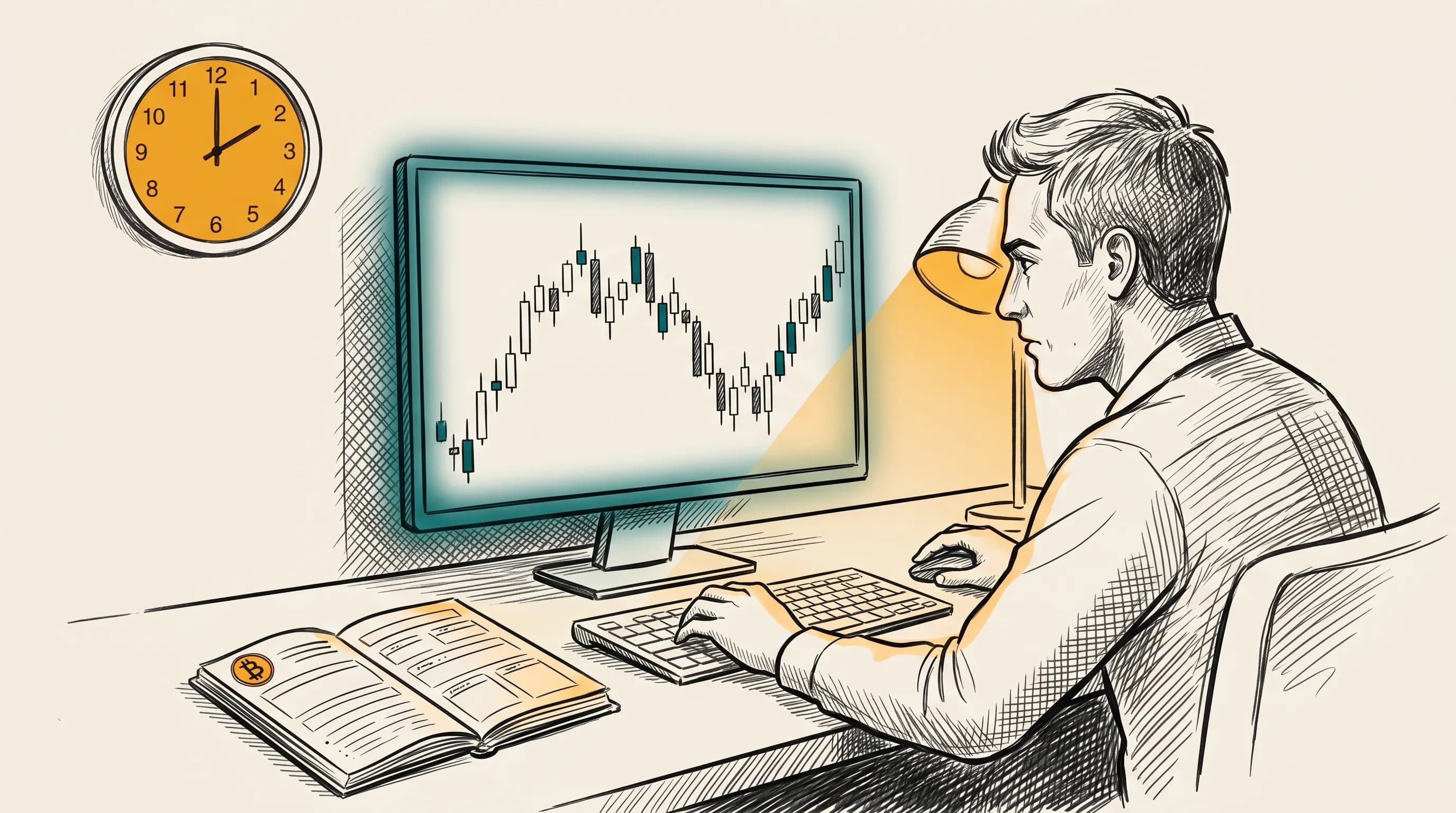
At 2 AM, when your phone lights up with an alert, you're already making a decision. Half-awake, adrenaline creeping in, you're either clicking buy or sitting on your hands. There's no opening bell to pace yourself by. No circuit breaker to pause the chaos. No lunch break where the position just sits quietly while you step back.
That's what makes crypto trading psychologically different from every other market. The opportunity is always there. And so is the temptation.
Most crypto traders understand this intellectually. They've felt the FOMO, the revenge trades, the "just a little longer" moments that turned a manageable position into a painful one. The problem isn't information. It's that there's no system for turning those experiences into something useful.
That's exactly what a crypto trading journal does.
Not a screenshot folder. Not a spreadsheet you open twice a month. A structured review system that converts raw trade history into feedback you can actually act on.
Why Journaling in Crypto Is Harder — and More Important
Futures traders have defined sessions. Forex has window-based liquidity. Even equities have a predictable daily rhythm.
Crypto has none of that.
You're dealing with 24/7 price action, multiple exchanges with different liquidity profiles, and an asset class that moves on regulatory news, influencer posts, protocol upgrades, and Bitcoin dominance shifts — sometimes simultaneously. The volatility isn't just in price. It's informational.
This makes journaling feel harder. Every trade seems context-specific. Conditions change faster. Emotional spikes are more frequent and more intense.
But that's exactly why a crypto trading journal matters more, not less.
Without a record, you're repeating patterns you can't see. The 3 AM entry that felt justified in the moment looks entirely different two weeks later in a cold review. The breakout setup that failed three times in a row has a clear pattern — but only if you wrote it down.
A well-structured trading journal software creates the one thing crypto trading constantly destroys: distance between you and the decision.
What to Actually Track in a Crypto Trading Journal
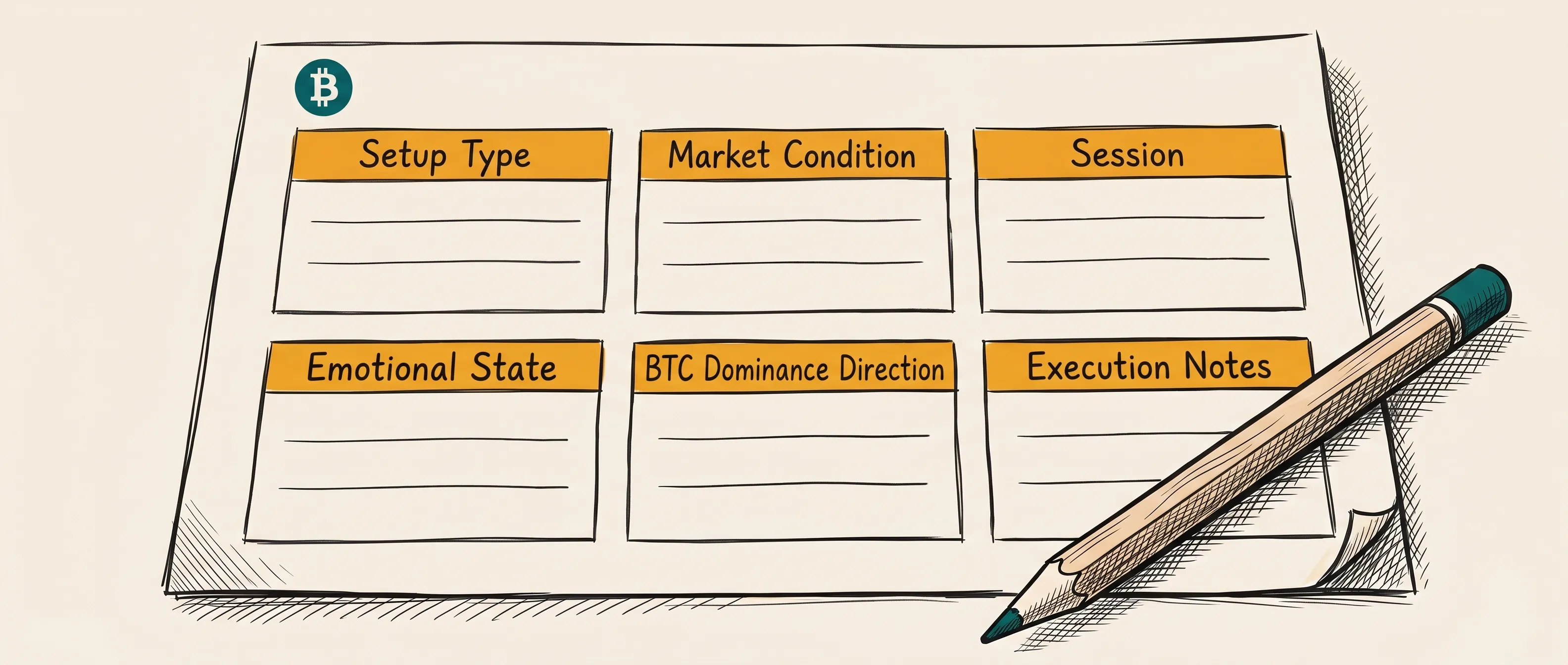
Most traders either track too much — 40-column spreadsheets they abandon in a week — or almost nothing. Here's what actually moves the needle:
Trade basics
Asset pair (BTC/USDT, ETH/BTC, altcoin tickers)
Exchange used
Entry and exit price
Position size as a percentage of portfolio (not dollar amount)
Timeframe (1H, 4H, Daily)
Direction (long or short)
Setup and context
Setup type (breakout, pullback, range trade, momentum)
Market condition at entry (trending, ranging, high volatility)
Bitcoin dominance direction at entry
Any relevant news or macro events in that window
Session timing (Asian, London, US overlap)
Execution quality
Did you meet your entry criteria exactly, or compromise?
Where was your initial stop and why?
Did you move it before it was triggered?
Was the exit planned or reactive?
Mental state
Energy level (rested vs. exhausted)
Emotional state at entry (calm, anxious, excited, bored, revenge-seeking)
External stressors that day
This last category is where almost every crypto journal falls short. Traders meticulously track price but ignore the person making the decision. They know what happened but not why they did what they did.
An AI trading journal can surface patterns across all these dimensions simultaneously — revealing not just that your altcoin breakout win rate is low, but that 80% of those entries happened during low-energy states or within two hours of a losing trade.
That's the gap between data and insight.
The Crypto-Specific Mistakes a Journal Will Expose
There's a pattern most crypto traders develop without noticing. Here's what structured journals consistently reveal:
Chasing after missing the initial move Bitcoin runs hard. You wait for the pullback. The pullback doesn't come the way you expect. You enter late, close to a local high. The trade works until it doesn't. Your journal will show you exactly how often this sequence plays out — and what your average result is when it does. Most traders are surprised how bad the number is.
Overleveraging after a winning streak Confidence in crypto often follows green days. And a string of wins feels like edge. But if your position sizing spikes after good runs, your journal will catch it. Tracking size as a percentage of portfolio — not a dollar figure — exposes this pattern without the noise of price movement distorting the picture.
Holding through adverse moves without a pre-written plan "I'll just hold it" is the most expensive thought in crypto. It's almost never written down before the trade. But it shows up constantly in post-trade review notes. A structured journal forces you to write your exit plan before entry — and that single habit changes how you manage every adverse move that follows.
Applying the same setup in the wrong market conditions A breakout strategy that performs well in a trending market tends to fail in a ranging one. Without a journal, you assume the strategy is broken. With one, you can see the strategy is sound — but you keep applying it in conditions where it has no edge.
Reviewing your risk-to-reward ratio segmented by market condition — not just overall — is what separates traders who improve from those who rotate through the same frustrations with different tickers.
Ignoring macro structure Crypto generally moves with Bitcoin. When BTC is in a distribution phase, altcoin breakouts tend to fade faster. When BTC is accumulating, almost everything can look like it's working. Most traders don't log this context. Their journal entries look similar regardless of broader market phase — so they can never isolate what actually mattered.
Building a Crypto Journal Routine That Sticks
The biggest obstacle isn't finding the right journal. It's building the habit in a market that has no natural endpoint.
Crypto's 24/7 nature means there's never an "end of day" moment to anchor a review. You have to create one deliberately.
Here's a routine that works for active crypto traders:
Pre-trade (90 seconds): Before opening a position, write the setup, entry criteria, stop placement, and target. This isn't about being bureaucratic — it forces clarity before you execute, and exposes weak conviction before it costs you.
Post-trade (immediately after): Note what happened. Was the entry clean? Did you hesitate? Did you move your stop? Did you exit at plan or reactively? Write this while the trade is fresh. Memory degrades fast, especially under emotional conditions.
Weekly review: This is where the compounding effect begins. Go through every trade from the week. Look for patterns. What conditions were present in your winners? Your losers? Are there setups you should stop taking entirely in the current environment?
Monthly pattern analysis: Once you have four or more weeks of data, use your trading performance tracker to run a proper analysis. Look at performance by session, by asset category, by setup type, and by your emotional state at entry. This is where genuine behavioral patterns surface — the kind that don't show up in weekly snapshots.
The goal isn't perfect journal entries. It's consistency over time. Rough notes from every trade are far more useful than detailed entries from only the ones you feel like writing up.
How AI Changes Crypto Journaling
Traditional journaling relies on you to recognize your own patterns. That's a significant cognitive ask — humans are notoriously poor at identifying their own blind spots, especially in high-emotion environments like crypto markets.
An AI trading journal reads across your entire trade history and surfaces correlations you'd never find manually. It can identify that your entries on high-volume news days underperform your non-news entries by a significant margin. That your average losing trade is substantially larger than your average winner, specifically when you're trading altcoins in the Asian session. That you consistently close winning trades early on assets you're less familiar with.
These patterns emerge from dozens or hundreds of trades — a scale no manual review process handles efficiently.
For crypto traders specifically, this matters more because the noise level is higher. More variables, more emotional turbulence, more market complexity. AI analysis cuts through that noise and returns a clear picture of where your actual edge lives — and where you've been hoping for one that doesn't exist.
ChartWise's AI assistant works directly with your trade data. You can ask it direct questions: "Where am I losing the most edge?", "Which setups are working in current conditions?", "Am I improving month over month?" The answers come from your own data, not generic trading content.
Crypto Journal vs. Other Asset Classes: What's Different
If you've previously used a futures trading journal or journaled equities, crypto requires a few structural adjustments:
24/7 timing field: Log the time of day and day of the week for every trade. Crypto has micro-seasonality — weekend liquidity profiles differ significantly from weekday sessions, and certain hours overlap with traditional market opens in ways that create distinct volatility patterns.
Bitcoin dominance as a baseline: Add a field for BTC dominance direction at entry. This single data point consistently reveals a lot about why altcoin trades succeed or fail, and almost no traders track it alongside their entries.
Exchange and fee context: Execution costs vary meaningfully across exchanges. Many traders are surprised by how much fees affect overall results across hundreds of trades — particularly on smaller altcoin positions where the percentage cost is higher.
On-chain context (for data-driven traders): For those who use on-chain signals, noting relevant metrics at entry — funding rates, open interest direction, exchange net flows — adds another interpretive layer that standard price-action journaling misses entirely.
The fundamentals of effective journaling transfer across every asset class. Crypto just requires you to be more specific about context, because the context changes faster.
When the Journal Tells You Something You Don't Want to Hear
This moment comes for every trader who journals honestly — and it's the most valuable part of the entire process.
You run a monthly review and the pattern is unmistakable: your altcoin positions are dragging down your overall performance. Or your leveraged entries consistently underperform your unleveraged ones. Or your best results cluster around one specific setup that you're only taking 20% of the time — while spending the other 80% on approaches with no real edge.
This is behavioral trading analysis doing its job. The data surfaces what instinct conceals.
The right response isn't to rationalize the result or argue with the numbers. It's to narrow your focus. Stop taking the low-edge setups. Increase the frequency of what actually works. Build rules that reflect what your data shows — not what you believe about yourself as a trader.
Addressing the emotional trading solutions your journal exposes — the revenge entries, the FOMO-driven sizing, the holds without a plan — is how a trading journal converts into real, lasting performance improvement.
Not by making you feel organized. By giving you an honest mirror that shows you exactly where your edge is and where you've been manufacturing one that isn't there.
Start Tracking What Actually Matters
The crypto market will keep moving. Opportunities will keep appearing. And without a structured review system, the same mistakes will keep happening — with different tickers and a different emotional story, but the same underlying pattern.
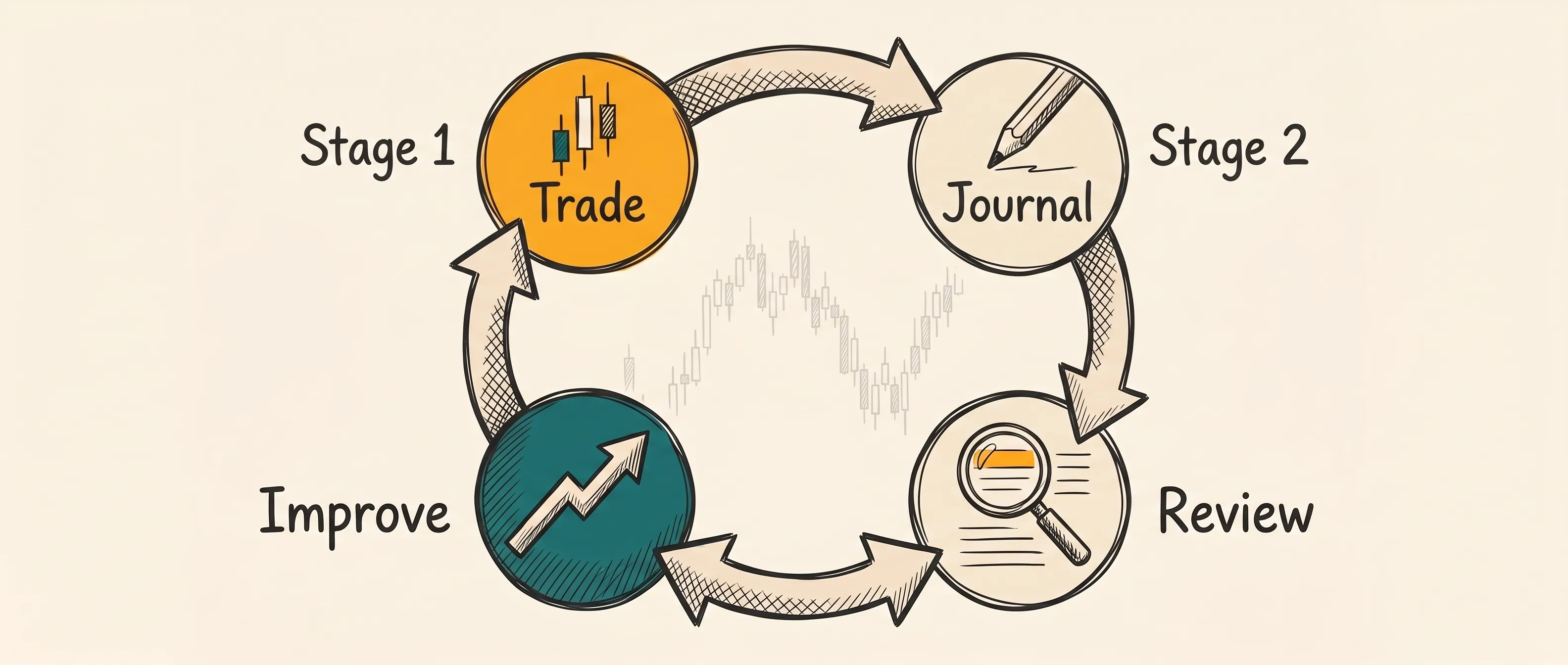
A crypto trading journal converts experience into data and data into improvement. Not eventually. Trade by trade.
ChartWise is built for exactly this. Auto-import your trades, get AI-powered insights across your full trade history, and ask your journal direct questions about your performance in plain language.
Join the waitlist at chartwise.app and be among the first to use it.
FAQ
What is a crypto trading journal?
A crypto trading journal is a structured record of your cryptocurrency trades that goes beyond entry and exit prices. It includes setup type, market context, emotional state, and execution quality — the inputs that determine whether your decision-making improves over time. A good journal turns your own trade history into actionable feedback.
What should I include in a crypto trading journal?
At minimum: asset pair, exchange, entry and exit price, position size as a percentage of portfolio, setup type, market conditions at entry, execution notes, and your emotional state before and during the trade. For crypto specifically, add Bitcoin dominance direction and session timing — these two fields reveal a disproportionate amount of context about why trades succeed or fail.
How often should I review my crypto trading journal?
Write immediately after each trade while the decision is fresh. Review weekly to catch short-term patterns. Run a full monthly analysis once you have 20 or more trades in the log — this is where behavioral trends become clear enough to act on. The weekly and monthly reviews are where improvement actually happens.
Can a trading journal genuinely improve crypto results?
Yes — consistently, for traders who review honestly. A journal doesn't improve results on its own. But the review process forces you to confront patterns you'd otherwise rationalize away. Most traders who journal seriously identify two or three recurring mistakes that, once addressed, have a meaningful positive effect on their overall performance.
What's the best format for a crypto trading journal?
A dedicated trading journal platform outperforms spreadsheets for most traders. Spreadsheets require manual setup, break down as data grows, and don't surface behavioral patterns automatically. A purpose-built platform like ChartWise auto-imports trades, tracks the metrics that matter for decision quality, and uses AI to analyze patterns across your full trade history.
Do I need to track my emotional state in a crypto journal?
Yes, especially in crypto. The 24/7 nature of the market and its higher volatility make emotional decisions more frequent than in any other asset class. Tracking emotional state at entry — even with a simple rating — surfaces correlations between how you felt and how your trades performed. For most traders, this correlation is stronger than they expect.
How is a crypto trading journal different from a stock trading journal?
The core principles are identical. Crypto requires additional context fields: time of day (because the market never closes), Bitcoin dominance direction, exchange used, and potentially on-chain metrics for data-driven traders. The emotional intensity of crypto also makes psychological tracking considerably more important than in equities, where trading hours create natural pressure-release windows.