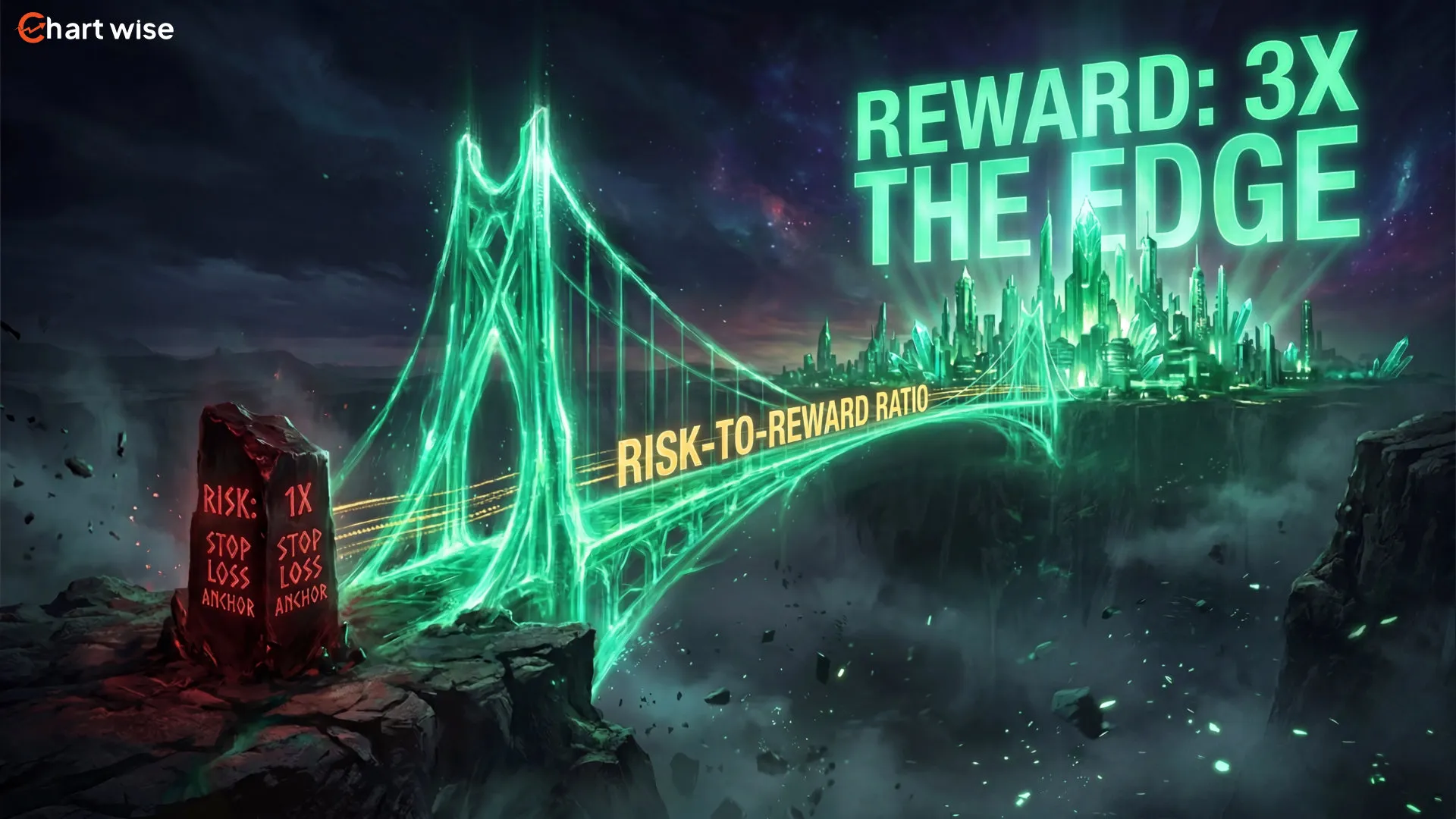
Ever had a week where you felt like you were doing everything right, only to realize your account said otherwise? You picked decent setups, stayed glued to the charts, maybe even won more trades than you lost, and still ended up frustrated. That kind of confusion is more common than most traders admit, and a lot of the time, the problem is not your analysis. It is your risk-to-reward.
This is one of those trading ideas that sounds basic when you first hear it. Risk a little, make more. Simple. But in real trading, this is where a lot of people quietly lose control of their edge. They focus on entries, market direction, and win rate but overlook the one thing that decides whether their approach can actually survive over time.
That is why risk-reward ratio trading matters so much. Not because it sounds smart, but because it changes how you think about every trade before money is on the line.
Why Traders Stay Busy but Still Don’t Move Forward
There is a pattern a lot of traders fall into.
They work hard. They study charts. They get better at spotting setups. They start feeling more confident in their market reads. But their results still feel uneven. One week looks promising; the next week gives it all back. It becomes this exhausting cycle of hope, effort, and disappointment.
Usually, the first instinct is to blame strategy.
Maybe the entries are off; maybe the timing is bad, maybe the market conditions changed. Sometimes that is true. But often, the deeper issue is simpler than that. The trades being taken are not structured well enough to produce healthy outcomes over a larger sample.
That is where risk-reward ratio trading becomes the real conversation.
Because a trade can look good on the chart and still be a poor trade in practice. If you are risking too much to make too little, or taking setups with limited room to move, the math starts working against you long before the trade is finished.
And no amount of screen time fixes bad math.
What Risk-to-Reward Ratio Really Means
At its simplest, risk-to-reward ratio compares what you are willing to lose on a trade with what you stand to gain if the trade works.
If you risk $100 to make $200, that is a 1:2 setup.
If you risk $100 to make $300, that is 1:3.
That part is easy enough to understand. But the real value of this concept is not the definition. It is what it forces you to do before entering.
It makes you pause.
It makes you ask whether the trade actually deserves your money.
That question alone can clean up a lot of impulsive trading.
Because once you start thinking in terms of risk and reward, you stop treating every setup like an opportunity. Some setups are valid, but still not worth taking. That is an important difference. And it is one of the first places traders start developing a real trading edge.

The Win Rate Obsession That Misleads So Many Traders
A lot of traders are more attached to being right than they realize.
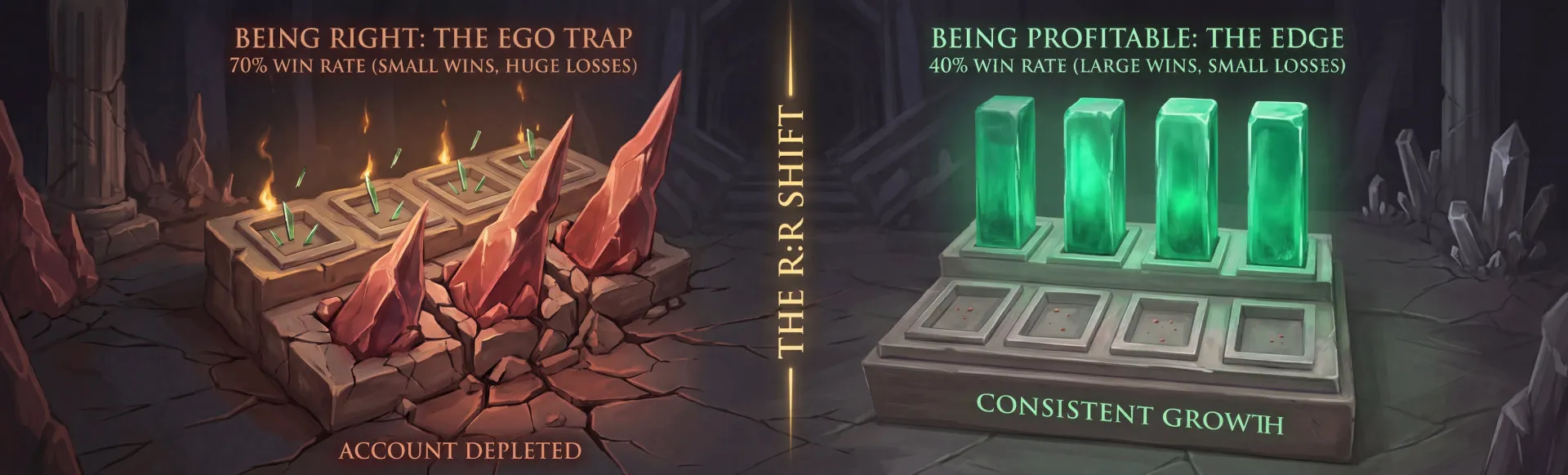
They want a high win rate because it feels like proof they know what they are doing. It is satisfying. It is reassuring. It makes a bad week easier to explain. But trading does not reward you just for being right often. It rewards you for managing the relationship between gains and losses.
That is where people get caught.
A trader can win seven trades out of ten, but if their winners are small and their losers are large, they can still lose money. Another trader can win only four trades out of ten, but if those winners are much larger than their losses, they can still end the month in profit.
That shift changes everything.
Because now the goal is not just to find trades that work. The goal is to take trades where the reward is meaningful enough to justify the risk. That is a much healthier way to approach the market, and it leads to better trade management almost automatically.
You become less eager to jump in. More selective. More honest about whether a setup has real room to move.
Why Risk-Reward Ratio Trading Is So Important for Long-Term Success
One trade means almost nothing on its own.
Any setup can fail. A clean chart can stop you out. A messy trade can run beautifully. That uncertainty is built into trading. So if one trade cannot prove much, what matters is what happens across twenty trades, fifty trades, or a hundred.
That is where risk-reward ratio starts doing its real work.
It gives your system room to survive normal losses.
Let’s say your average setup is around 1:2. That means one solid winner can cover two full losing trades. Right away, the pressure changes. You do not need to chase perfection. You do not need to panic every time a trade fails. You just need to keep taking quality setups and let the bigger sample play out.
That is what long-term success usually looks like in trading.
Not constant winning. Not flawless execution. Just a process where the upside consistently outweighs the downside over time.
Without that, even a trader with decent instincts can stay stuck for months.
A Familiar Trading Story
Picture a trader who does a lot of things reasonably well.
They mark levels. They wait for structure. They are not reckless. But once the trade goes live, they start second-guessing. If price moves a little in profit, they close early because they do not want to give anything back. If price moves toward their stop, they hesitate and hope the market turns.
So their winners end up smaller than planned, and their losers often hit full size.
That trader usually feels confused. They are not making wild mistakes. They are trying. They care. But their results still feel disappointing.
Now picture another trader.
They are not perfect either, but they know exactly where the trade idea fails, where the target makes sense, and how much size they can carry without getting emotional. Their position sizing is based on risk, not excitement. When the trade does not work, they take the loss. When it does work, they give the idea space to reach its intended reward.
That second trader is not necessarily smarter.
They are just more structured.
And over time, structure beats intensity almost every time.
Position Sizing Changes More Than Most People Realize
A lot of traders treat position sizing like a separate concept, but it is tied closely to risk-to-reward.
You can have a great-looking trade on paper, but if your size is too large, you will probably manage it badly. You will panic during normal pullbacks. You will cut the trade early. You will react instead of following the plan.
That is why sizing matters so much.
It is not only about protecting the account. It is also about protecting your decision-making.
When your size matches your actual risk tolerance, you think more clearly. You can let trades play out. You can accept losses without spiraling. You can judge setups more honestly because your emotions are not screaming over the numbers.
This is where a risk calculator can be genuinely useful. Not because it is complicated, but because it keeps the math clean. It helps you size positions based on the stop distance and account risk, instead of whatever you happen to feel in the moment.
That kind of consistency builds confidence slowly, but it builds the right kind.
The Market Is Not Always the Main Problem
This is a hard truth for many traders, but it matters.
Sometimes the strategy is not the main issue. Sometimes the problem is how the trade is being handled.
A trader enters with a clean plan, then exits too early. Or widens the stop after entry. Or takes profit before the setup has had any real chance to pay. Or forces a target that looks good on paper but is unrealistic on the chart.
These are not small details. They are the difference between an idea and an actual result.
That is why trade management deserves more attention than it usually gets. A strong setup can still underperform if the trader managing it is reacting emotionally. And that is exactly why reviewing trades matters. Once traders start looking back at what they planned versus what they actually did, the truth becomes easier to see.
In many cases, the issue is not a lack of knowledge.
It is a lack of clear review.
What a Smart Trading System Actually Looks Like
The phrase "smart trading system" can sound a bit grand, but in practice, it usually comes down to something simple.
A smart system helps you make better decisions before emotion takes over.
It tells you where the trade fails. It shows you what the realistic reward is. It helps you size correctly. And afterward, it gives you a way to review what really happened.
That is what traders need more of.
Even something as simple as tracking entry, stop, target, notes, emotional state, and final outcome can reveal patterns that would otherwise stay hidden. Over time, those patterns show you whether your trading edge is real, whether your risk-to-reward is being respected, and whether your current habits support the kind of results you want.
That is how a trader starts becoming more consistent. Not by chasing a perfect method, but by making their process easier to repeat and easier to review.
A Better Question to Ask Yourself
Instead of asking, “How often am I right?”
Try asking something better.
Are my winners large enough to pay for my losers?
Am I taking trades that truly offer enough reward for the risk?
Is my position sizing helping me stay calm, or making me more reactive?
Am I actually following the plan I make before entry?
Those questions usually lead to more honest answers than win rate ever will.
And honest answers are where improvement starts.
The Big Picture
Long-term trading success is rarely about being the smartest person in the room. More often, it comes down to structure, discipline, and understanding the math behind your decisions. That is why risk-reward ratio trading matters so much. It keeps you focused on what actually sustains results, not just what feels good in the moment.
The traders who last are usually the ones who learn to protect downside, size well, manage trades properly, and review their own behavior with honesty. And when that review is supported by a structured system like ChartWise, it becomes much easier to spot what is working, what is slipping, and where the real edge is starting to form.