The Setup That Got Quietly Avoided
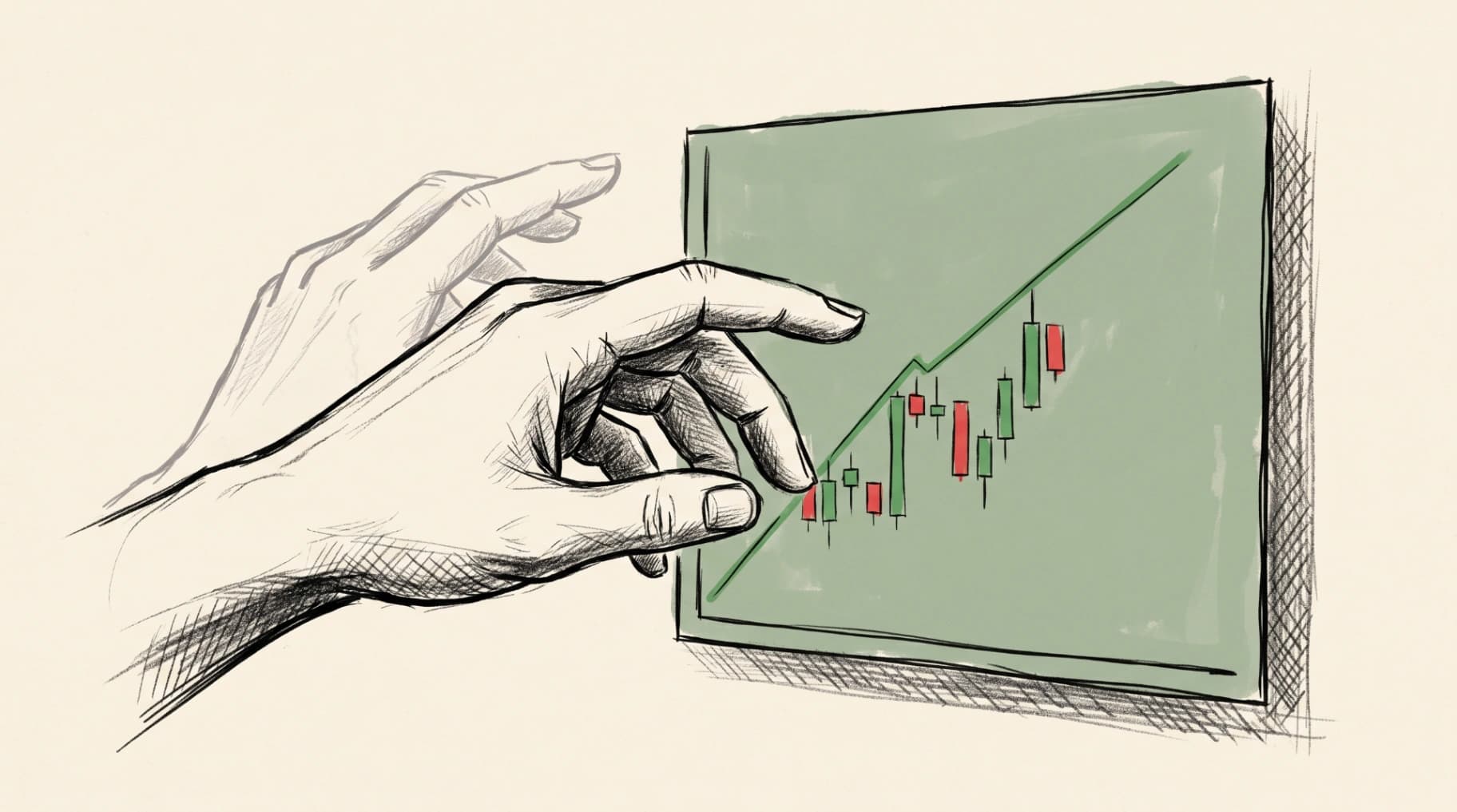
The setup met every listed criterion, the kind that would normally get logged as a clean entry without much second-guessing. Instead, there was a reason to wait one more candle. Then a reason the size should be smaller than usual, just this once. Then the window closed, the setup played out exactly as expected, and the position that would have captured it was never actually opened.
None of these individually looked like avoidance. Each one had a reasonable-sounding justification attached to it in the moment. That is what makes this pattern so difficult to catch: self-sabotage in trading rarely announces itself as sabotage. It shows up dressed as caution, patience, or prudence, right up until a pattern of missed clean setups becomes too consistent to explain any other way.
Why This Does Not Look Like Fear
The instinct is to file this under fear of a bad outcome, but that explanation does not quite hold up under closer inspection. Fear of a setback would predict hesitation on risky, marginal trades. What actually gets avoided is often the cleanest, most well-supported setups, the ones with the least ambiguity attached to them.
A clean setup carries something a marginal one does not: a clear, unambiguous test. If it works, there is no room left to argue the outcome was luck or bad timing. If it does not work, in this behavior pattern something more identity-related feels at stake than usual. Avoiding the clearest test is, paradoxically, often easier than sitting with a definitive result either way.
The Quiet Cost of Being Right
There is a second, less obvious version of the pattern that shows up after a position is opened rather than before. A trade is working, moving cleanly in the intended direction, and the position gets closed early, well ahead of the plan, for a reason that sounds sensible enough in the moment: securing what is already there, not being greedy, playing it safe.
The trouble is that this pattern of trimming a working position short tends to be selective. It happens most often on the trades that are working best, the ones with the most room left to run according to the original plan. A position that is merely adequate rarely gets this treatment. The best-performing setups are the ones most likely to get cut short, which is a strange thing for a purely risk-based explanation to account for.
Where This Actually Comes From
Self-sabotage in trading is rarely about the market at all. It tends to trace back to a mismatch between the identity a trader has settled into, careful, modest, not the type to get ahead of themselves, and the evidence that a clean setup or a strong result would provide against that identity.
A trader comfortable thinking of themselves as steady rather than exceptional will often find quiet ways to keep the results consistent with that self-image, even when the setups in front of them do not call for it. That mismatch sits close to the root of trading confidence, the sense of legitimate skill that lets a strong result feel earned rather than threatening. This is not conscious. Nobody sits down and decides to sabotage a good trade. It shows up as a string of small, individually defensible choices that happen to add up to the same outcome each time.
What It Looks Like Tracked Over Time

The only way this pattern becomes visible is by tracking setups that met criteria against setups that actually got taken, not just tracking the trades that happened. This is exactly the kind of gap that trading psychology tools built around structured, dated logging are meant to catch, since a log that only records executed trades will never show it, the whole pattern lives in what did not happen.
Reviewing a stretch of sessions with this lens usually surfaces something specific: a cluster of skipped or trimmed setups that share a common thread, often the strongest, most confidence-inspiring ones in the group. That thread is the actual signal, far more than any single missed trade on its own.
Building a Test That Cannot Be Talked Around
Because this pattern hides inside individually reasonable decisions, the only real defense is a pre-committed rule that removes the moment-to-moment judgment call entirely. If a setup meets every written criterion, the position gets taken at the planned size, full stop, with the reasoning for any deviation written down as a fixed part of the trader daily routine before the session starts rather than invented in the moment.
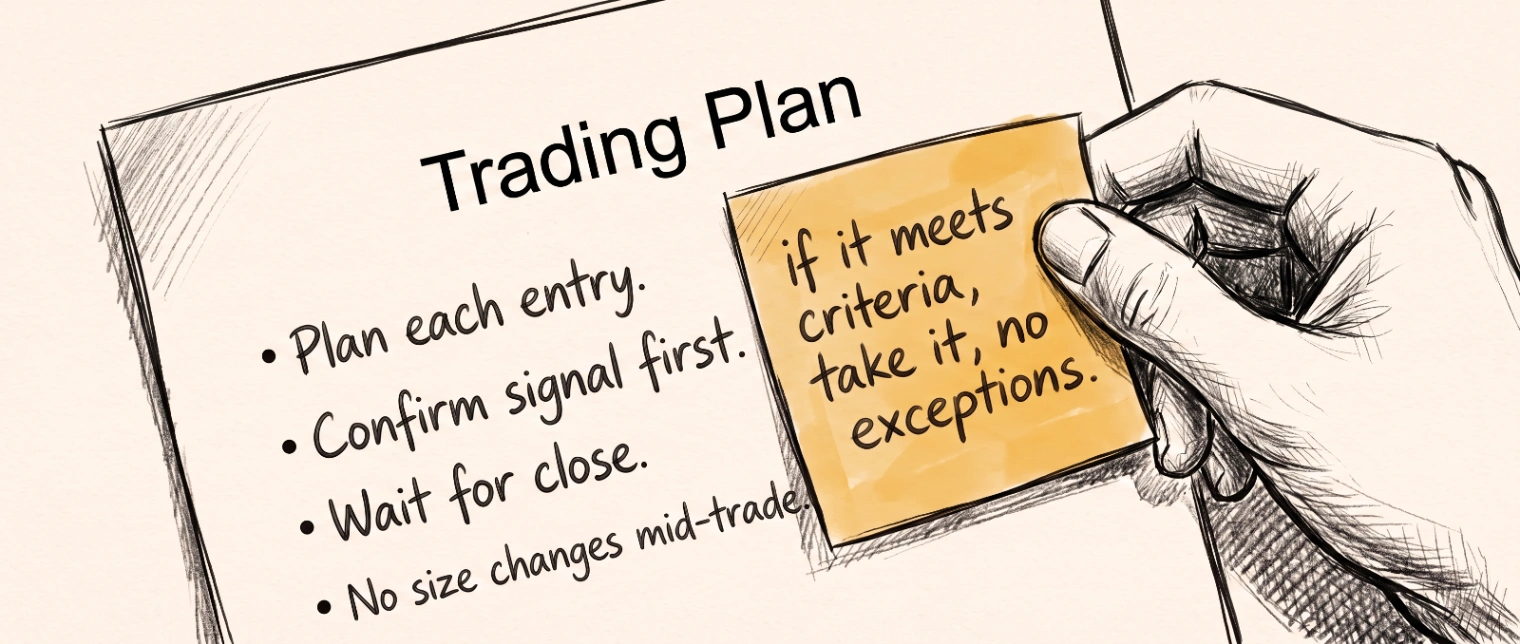
The same applies to exits. A plan that specifies where a position gets closed, written before the trade is open, removes the space where a working trade quietly gets trimmed short for reasons that only make sense after the fact. This kind of structural trading discipline matters more here than in almost any other pattern, because the alternative, deciding in the moment, is exactly the mechanism the sabotage runs through.
Why This Is Different From Trading Tilt
This pattern is easy to confuse with trading tilt, but the two run in close to opposite directions. Tilt is an erosion of restraint, entries speeding up, sizing creeping upward, discipline eroding under pressure. Self-sabotage is restraint turned against a trader's own good decisions, avoidance and shrinking rather than overreach.
Both patterns benefit from the same underlying habit, a written plan checked against consistently, but they show up as opposite symptoms and need to be recognized as distinct rather than lumped into one general category of undisciplined trading.
FAQ
How is self-sabotage in trading different from ordinary caution?
Ordinary caution responds to genuine ambiguity or risk in a setup. Self-sabotage tends to target the clearest, most well-supported setups specifically, the ones with the least ambiguity, which points to something other than a rational risk assessment driving the avoidance.
Why do the best-performing trades get cut short most often?
Because a strongly working trade provides the clearest possible evidence against a trader's comfortable self-image as modest or careful. Trimming it early keeps the outcome consistent with that self-image, even though the plan called for holding longer.
How can this pattern actually be tracked?
By logging setups that met written criteria against setups that were actually taken, not just recording executed trades. The pattern lives entirely in what did not happen, so a log of trades alone will not reveal it.
What is the most effective defense against this pattern?
A pre-committed rule that a setup meeting every written criterion gets taken at the planned size, with any deviation reasoned out and recorded before the session starts, not decided in the moment when the identity-protecting instinct is active.
Is this the same thing as trading tilt?
No. Tilt is an erosion of restraint that shows speeding up and oversized entries. Self-sabotage is restraint turned inward against a trader's own good decisions, showing up as avoidance and early exits rather than overreach.