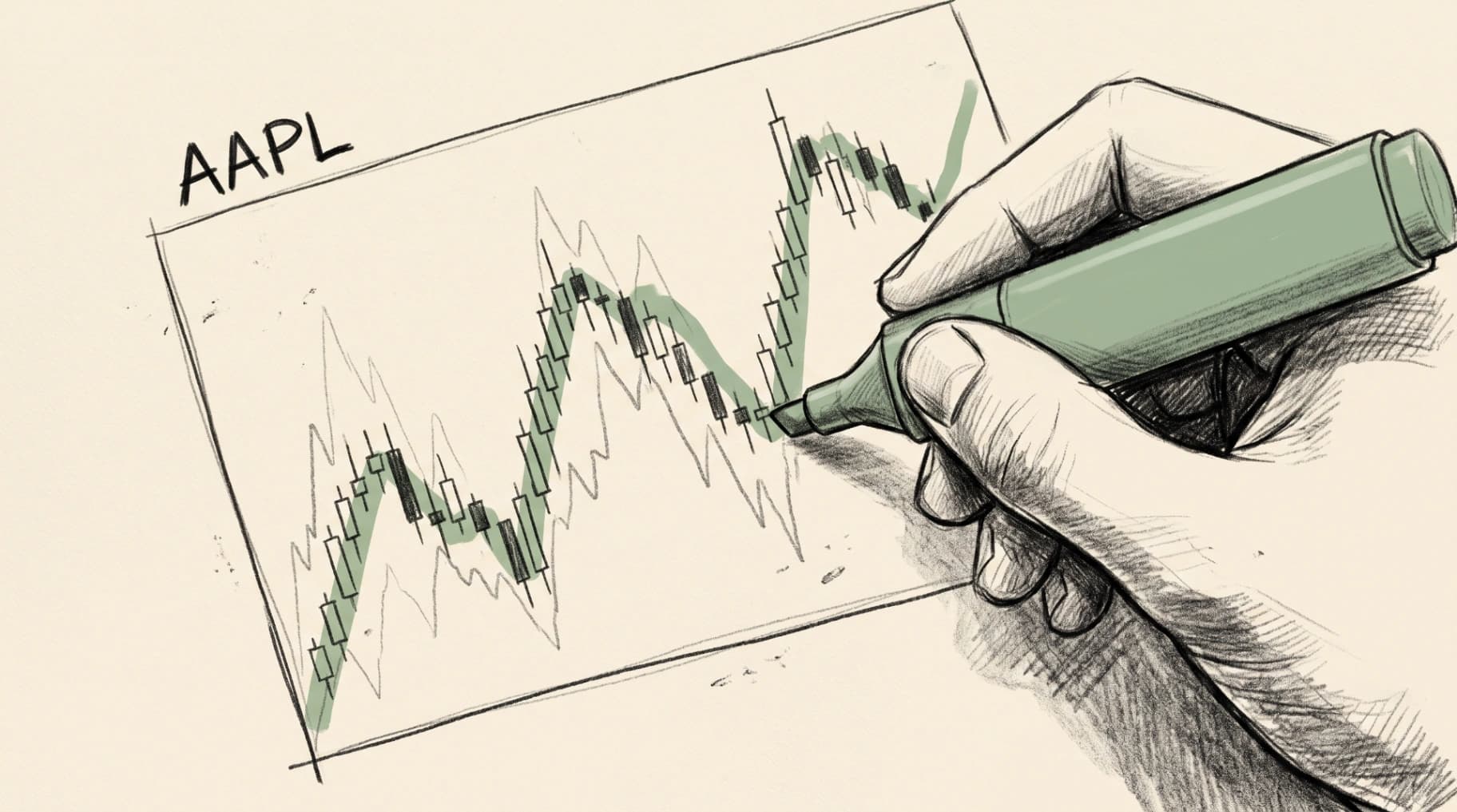
A Morning That Felt Like Skill
The chart lines up. The setup matches something from three weeks back that worked out well, and the entry goes in with a kind of quiet certainty, the sort that does not feel like a guess. Forty minutes later the trade is up, and there is a clear, specific memory of exactly why: the read was good, the timing was good, the plan was followed.
None of that memory is wrong, exactly. It is just incomplete in a way that is very hard to notice from the inside. That gap between what actually happened and what gets remembered as having happened is where most cognitive bias in trading actually lives, not in some dramatic error but in a quiet story the mind tells about a trade after the fact.
The Trade That Rewrites Itself
Close the winning trade and look back at the entry. It looks obvious now. The setup looks clean, the signal looks clear, and the moments of hesitation before pulling the trigger have mostly faded from memory.
This is hindsight bias, and it is almost invisible while it is happening because it does not feel like editing the past. It feels like remembering it accurately. The danger is not the winning trade itself. It is what gets filed away as the lesson: that the entry was clean and repeatable, when the honest version included real doubt that simply did not make it into the memory.
A trade journal written immediately after the close, before the story has time to smooth itself out, is the only reliable way to catch this. Not a summary written that evening, but notes taken in the moments right after the exit, while the hesitation is still fresh enough to record.
When the Win Is Yours and the Blame Is the Market's
A few trades later, a setup that looked just as clean does not work out. The instinct that follows is almost automatic: the market shifted unexpectedly, volume dried up, a headline moved things sideways. Something external gets the blame, quickly and without much scrutiny.
This is self-serving bias, and it runs in exactly the opposite direction of hindsight bias. Wins get credited to skill. Setbacks get credited to circumstance. Both distortions serve the same purpose, protecting a stable sense of being a good trader, and both make it much harder to see a real pattern developing across behavioral trading analysis over time.
The tell is in the language of the log itself. A journal full of entries like "read the setup well" next to setbacks explained away as "market noise" or "bad luck" is not a record of what happened. It is a record of a story being protected. A useful log treats wins and setbacks with the same level of scrutiny, asking the same question of both: what exactly led here.
The Trades That Never Happened
There is a third distortion that shows up less in single trades and more in how a session feels overall. After a stretch of good calls, sizing tends to creep upward, decisions start coming faster, and a sense sets in that market conditions are somehow being read correctly right now in a way they were not before.
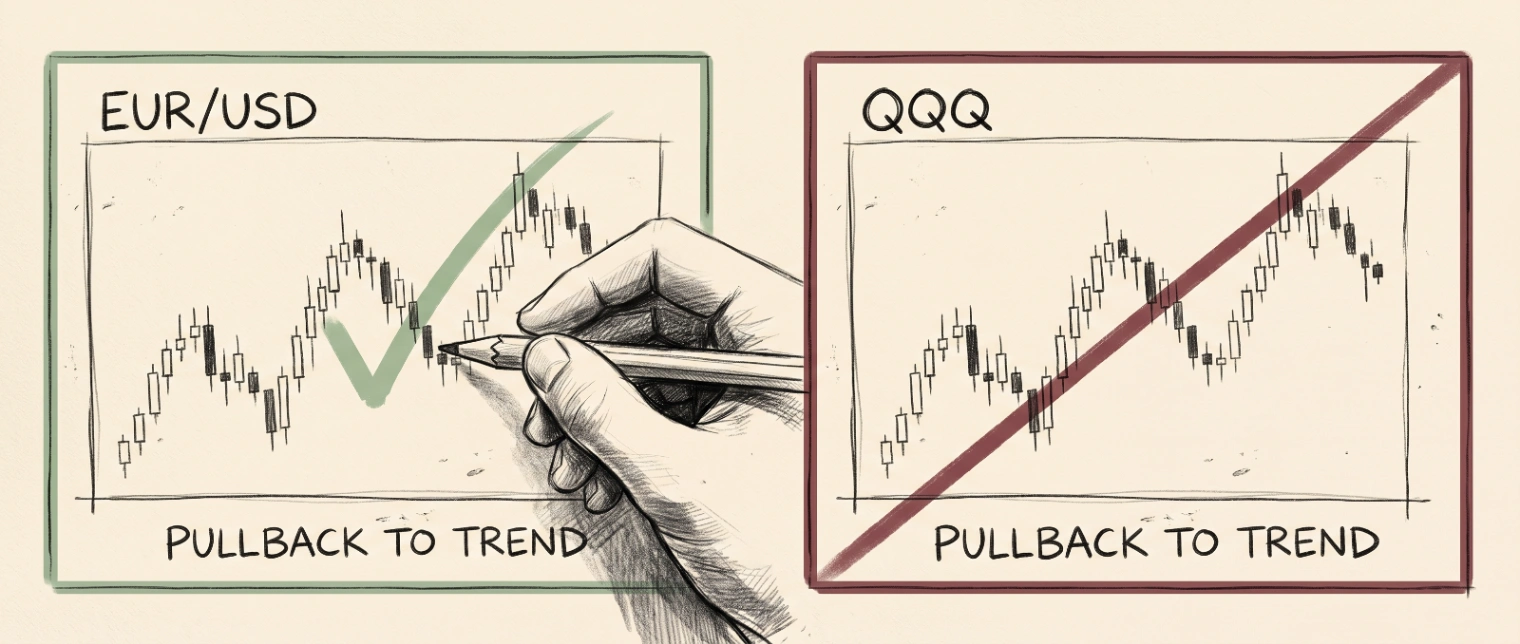
This is illusion of control, the sense that a string of good outcomes reflects skill in reading the market rather than a run of variance that could just as easily have gone the other way. It is one of the hardest biases to catch because the evidence, a stretch of winning trades, genuinely exists. The problem is not the results. It is the conclusion drawn from them, that current conditions are unusually well understood, which quietly loosens the discipline that produced the good stretch in the first place.
The clearest sign is sizing that grows without any change in the setups being taken. If risk per trade is drifting up while the strategy on paper has not changed, that is illusion of control showing up as a number rather than a feeling.
Why Noticing Does Not Fix It
None of these three biases feel like distortion from the inside. Hindsight bias feels like an honest memory. Self-serving bias feels like a fair account of what happened. Illusion of control feels like genuine skill. That is what makes them different from an obvious mistake like trading tilt, which usually announces itself through visibly erratic behavior. These three are quieter, and quieter is more dangerous, because there is no obvious moment to catch them. They also sit alongside a different set covered in cognitive trading biases, which walks through the patterns that shape entries and exits rather than the ones that shape memory afterward.
Being aware that these patterns exist is not the same as being immune to them. Awareness helps in the abstract and does very little in the middle of a live session, when the story being told about a trade feels, in the moment, like the truth.
Building a Record That Does Not Lie
The only real defense is external. A written log, filled out immediately and consistently, catches what memory edits out. Reviewing that log on a fixed schedule, not just after a rough stretch, catches drift before it becomes a pattern. Comparing the story told about a trade against the actual entry conditions, recorded before the outcome was known, is what separates a real lesson from a comfortable one.
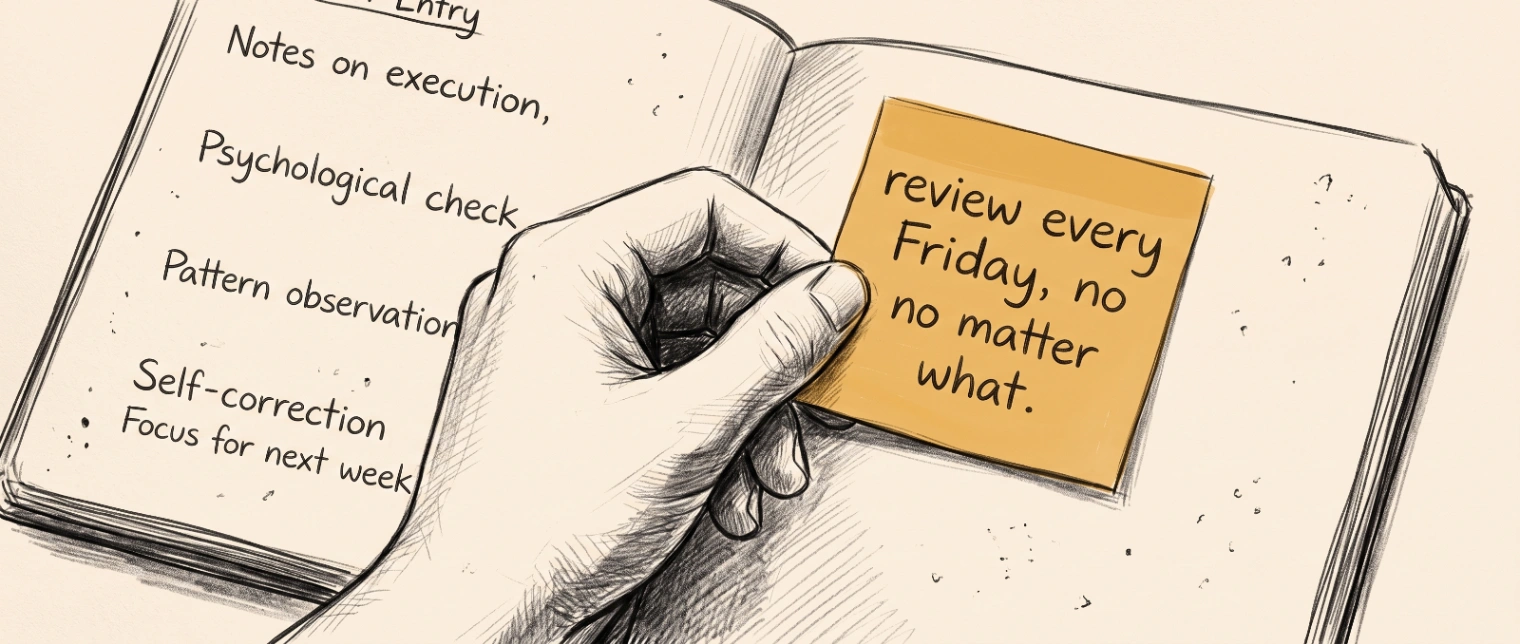
trading psychology tools built around this kind of structured, dated logging exist precisely because memory is not a neutral record. It edits, protects, and simplifies, usually in ways that feel completely reasonable at the time. The only way around that is a system that does not have the same incentive to make the story feel good, paired with the trading discipline to actually read it back honestly.
FAQ
What is the difference between hindsight bias and self-serving bias?
Hindsight bias distorts memory of a single trade after the outcome is known, making the entry look more obvious or planned than it actually felt at the time. Self-serving bias distorts credit and blame across multiple trades, attributing wins to skill and setbacks to outside factors.
How does illusion of control show up in trading specifically?
It usually shows up as sizing or frequency creeping upward during a winning stretch, driven by a sense that current market conditions are being read unusually well, even when the underlying strategy has not actually changed.
Why is a trade journal the main defense against these biases?
Because all three biases distort memory or attribution after the fact, and a journal written immediately after each trade, before the story has time to settle into something more flattering, preserves what actually happened rather than what gets remembered.
Can experienced traders still fall into these biases?
Yes. These are memory and attribution patterns tied to how the mind processes outcomes, not gaps in market knowledge, so experience reduces neither the frequency nor the pull of them without a deliberate system in place to catch them.
Is noticing a bias enough to stop it from affecting a trade?
Rarely on its own. These distortions feel accurate from the inside in the moment they occur, which is why an external record, reviewed on a fixed schedule rather than only after a rough stretch, tends to work better than trying to catch the bias by feel alone.