The Review That Never Actually Happens
The week ends, the results get a quick glance, and something in the back of the mind registers whether it was a good week or a rough one. That is usually the full extent of the review. Monday starts again with nothing carried forward, no adjustment made, no pattern from the week before actually informing anything about the week ahead. The review that was supposed to happen gets replaced by a feeling, and a feeling does not hold much information.
This happens even to traders who keep a careful daily log, because logging each day and reviewing a week are two different disciplines that get treated as one. The log without the review is just an archive. Nothing in an archive changes behavior unless someone actually goes back through it on a fixed schedule and asks specific questions of it.
Why a Daily Glance Is Not a Review
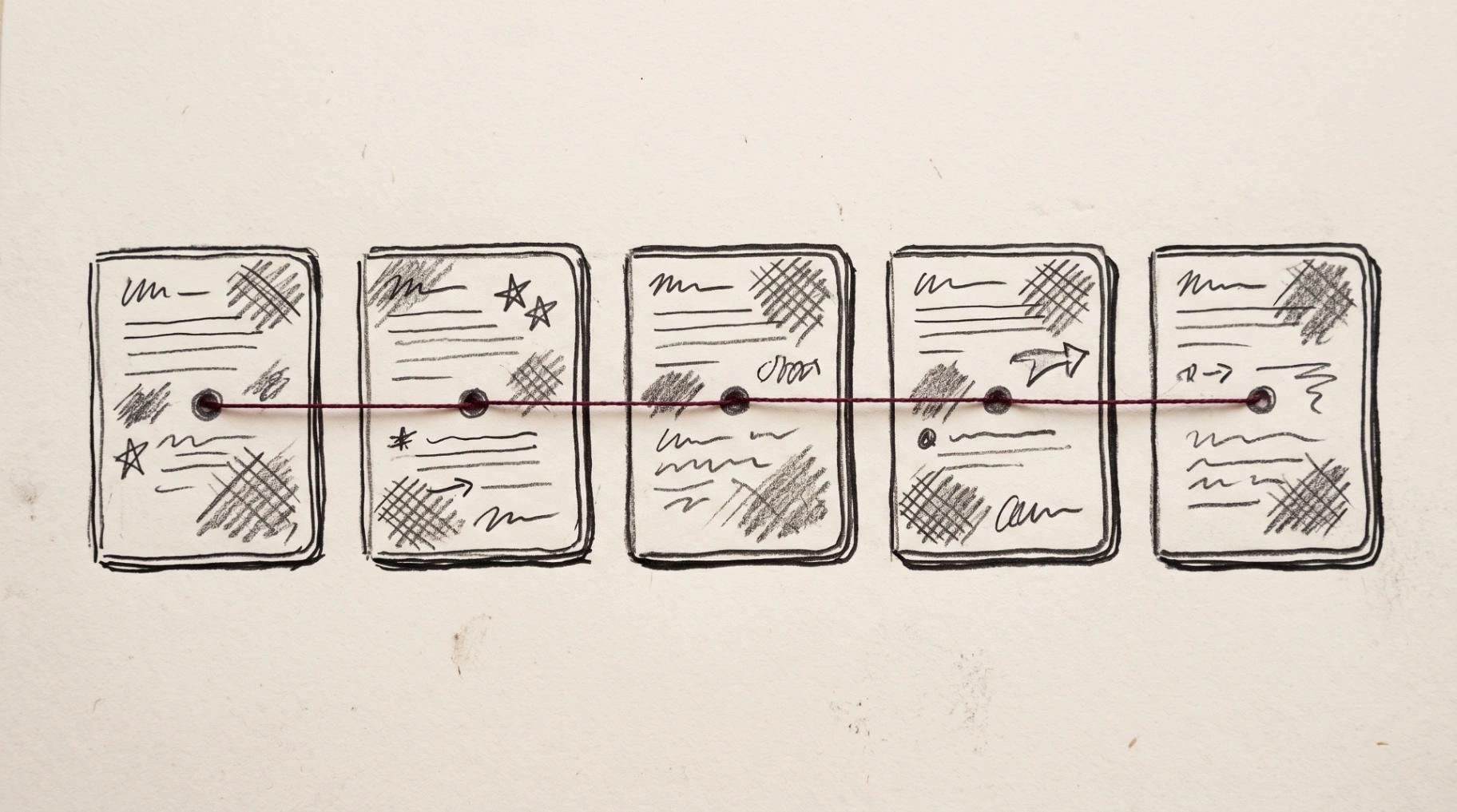
A quick look at each day as it happens catches almost nothing, because a single day rarely contains enough information to show a real pattern. One deviation from the plan looks like an isolated decision. Three of the same deviation across a week looks like something that needs to be addressed directly, but that only becomes visible when the week gets read as a set rather than one day at a time.
This is the same gap that shows up in self sabotage trading, where the pattern lives entirely in what did not happen across several days rather than in any single trade. A daily glance will never surface that kind of pattern. Only a review that steps back and reads several days together actually can.
What a Real Weekly Review Actually Looks At
A structured review does not need to relitigate every trade from the week. It needs to answer a small, fixed set of questions, the same ones every week, so the answers can actually be compared against the previous week's answers rather than existing in isolation.
How many entries followed the written plan versus how many deviated from it, and what the deviations had in common if there is a pattern. Which setups produced entries marked as sound decisions regardless of outcome, and which produced entries marked as needing attention. Whether sizing stayed consistent across the week or crept in one direction. Whether any of the mechanical rules, a cooldown, a size lock, a walk-away trigger, actually got triggered, and if so, whether they held.
Answering the same questions in the same order every week is what turns the review into something that can be compared over time instead of a fresh, unstructured look at the week that just happened.
The One Question That Makes the Review Useful

Of everything a weekly review can ask, one question tends to do more work than the rest combined: for each setup that showed up more than once during the week, would it get taken again under the same conditions, independent of how it actually turned out. This question forces the review back onto the decision rather than the result, which is the same discipline covered in journaling losing trades, applied now across a full week instead of a single entry.
A setup that gets a clear yes to this question, even after a week that did not go well, is a setup worth keeping in the plan. A setup that gets a hesitant answer, even after a week that went fine, is worth a closer look regardless of what it produced.
Where the Losing-Trade Log Actually Pays Off
This is the point where a well-kept log of individual entries stops being an archive and starts being useful, because a review built on three-line entries, written honestly in the moment rather than reconstructed from memory a week later, is the only version of a review that reflects what actually happened rather than what feels true in hindsight.
A review attempted without that log underneath it tends to lean on whichever trades are easiest to remember, which usually means the most recent ones or the most emotionally charged ones, neither of which is a reliable sample of the full week.
Making the Review a Fixed Appointment
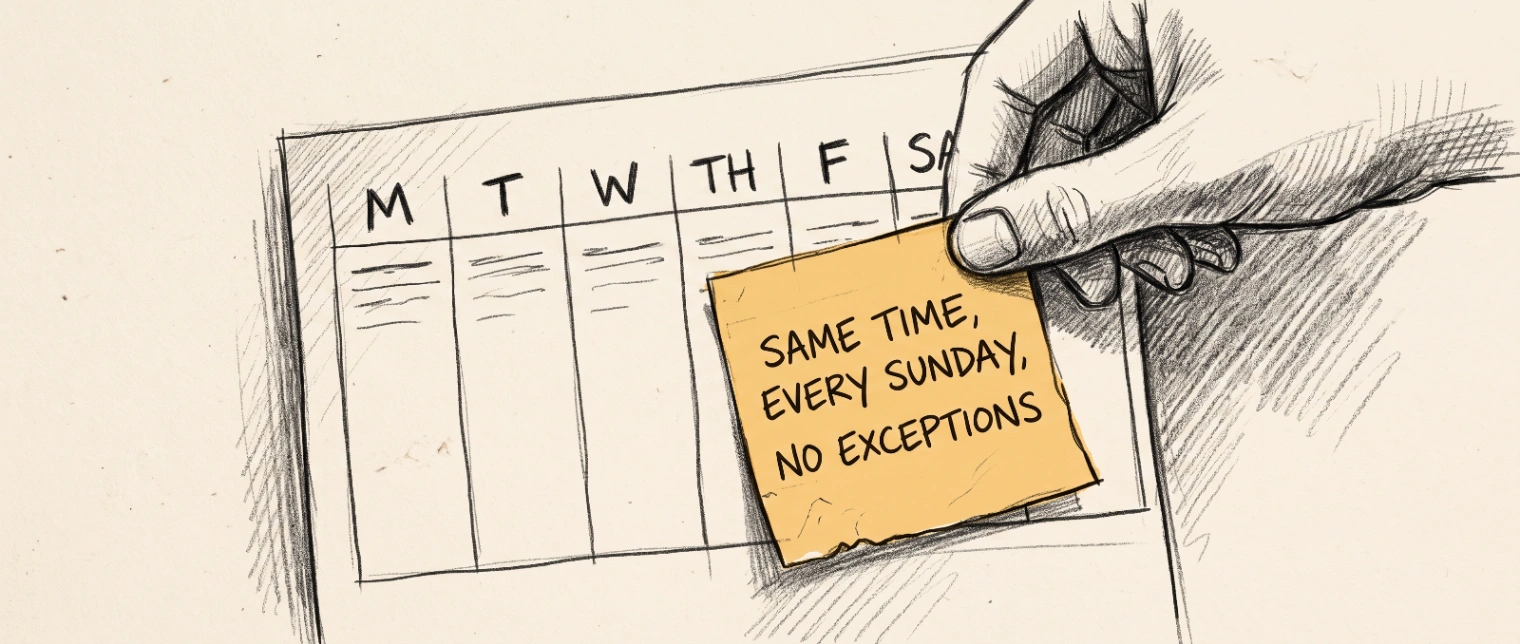
The review only holds its value if it happens on a fixed schedule regardless of how the week went, not only after a rough stretch prompts a search for reassurance and not skipped after a good one because everything already feels fine. A review that only happens reactively ends up measuring mood more than performance, showing up exactly when someone is either looking for validation or trying to make sense of a setback, neither of which produces an honest read.
Building the review into a fixed trader daily routine, the same day and the same time every week, treats it as a structural part of the process rather than an optional step that only happens when there is enough motivation for it. That structure is what eventually produces real trading consistency, not because any single review changes much on its own, but because the accumulation of honest, comparable weekly reads does.
Why This Is Worth the Time It Takes
A structured weekly review rarely takes more than twenty or thirty minutes once the habit is in place, because most of the real work already happened in the daily entries that fed into it. What the review adds is not more data. It is the comparison across time that a single entry, read alone, can never provide.
That comparison is what separates a trader who is genuinely improving from one who is simply accumulating entries without ever reading them as a set. The same kind of structural trading discipline that holds up a written plan during a single session is what makes a weekly review worth keeping on the calendar long after the initial motivation to start one has faded.
FAQ
Why is a daily glance not the same as a weekly review? A single day rarely contains enough information to show a real pattern. A deviation that looks isolated on one day can turn out to be a repeated pattern across the week, but that only becomes visible when several days get read together rather than one at a time.
What questions should a weekly review actually ask? A fixed set answered the same way every week: how many entries followed the plan versus deviated from it, which setups produced sound decisions regardless of outcome, whether sizing stayed consistent, and whether any mechanical rules got triggered and held.
What is the single most useful question in a weekly review? For each setup that appeared more than once, whether it would be taken again under the same conditions, independent of how it actually turned out. This keeps the review focused on decision quality rather than results.
Why does a weekly review depend on daily journal entries? Because a review built on entries written honestly in the moment reflects what actually happened. Without that log, a review tends to lean on whichever trades are easiest to remember, which is rarely a reliable sample of the full week.
How long should a weekly review actually take? Usually twenty to thirty minutes once the habit is established, since most of the real work already happened in the daily entries. The review adds comparison across time, which a single entry read alone can never provide.