Introduction
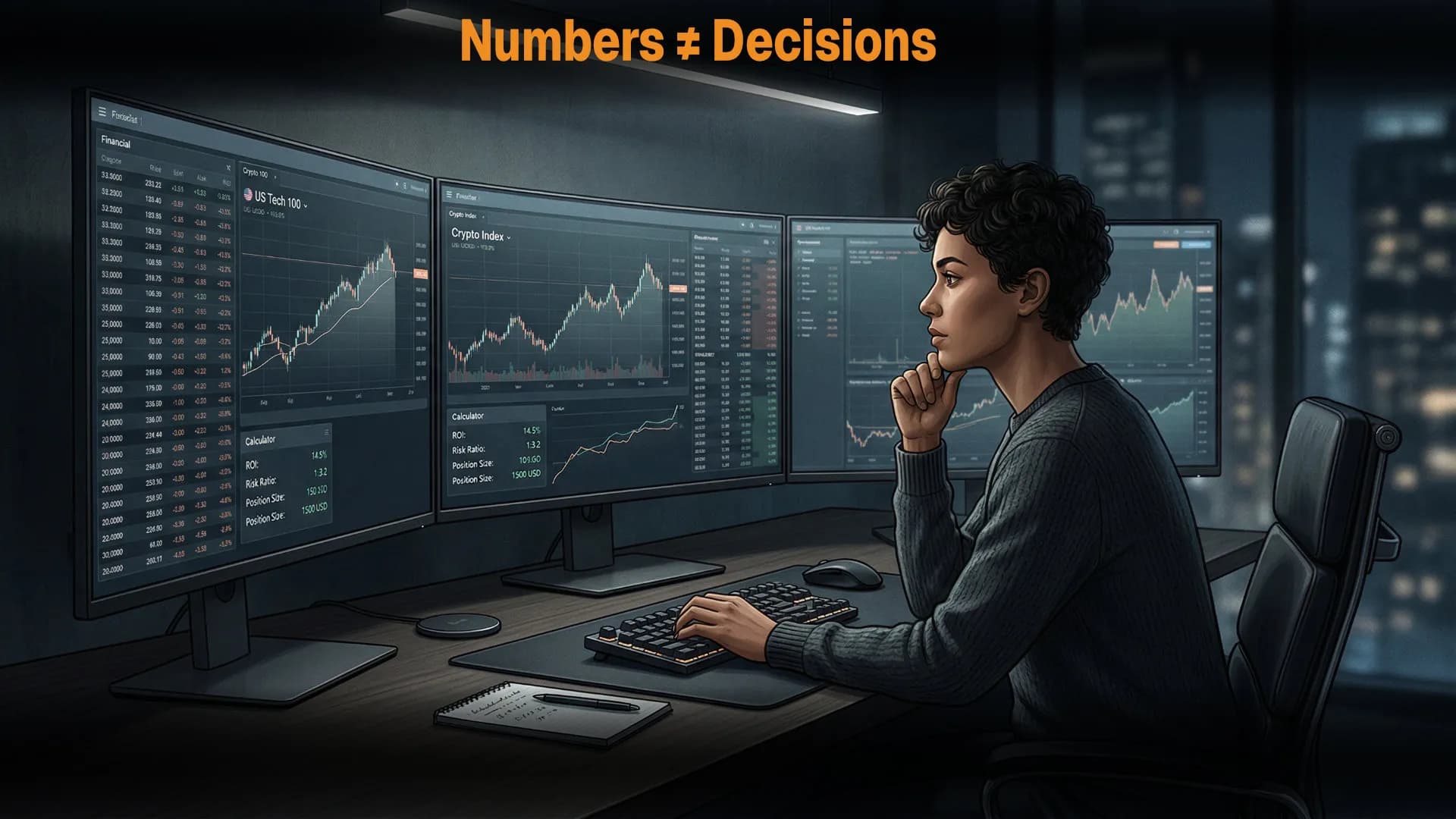
Something is comforting about calculators. You enter a few numbers, adjust a timeline, maybe increase the monthly amount just to see what happens, and suddenly the future feels easier to understand.
A SIP calculator can show how small monthly contributions may grow over time. A brokerage calculator can give you a clearer picture of trading costs before you place an order. Used well, these tools can bring structure to decisions that otherwise feel vague.
That clarity is helpful. But it can also become misleading when the calculator starts doing more than it should.
When Calculators Start Shaping Decisions
A lot of investors do not notice when this shift happens.
They begin by using investment calculators to explore possibilities, which is exactly what these financial planning tools are meant to do. But over time, the output starts carrying too much authority.
A neat projection begins to feel like proof. A favorable number starts sounding like conviction. And before they realize it, the tool is no longer supporting the decision. It is quietly shaping it.
That is where the problem begins.
When Numbers Start Feeling Safer Than Judgment
Most people do not misuse calculators in an obvious way. It usually happens quietly.
Someone checks a long-term projection and gets excited by the result. Someone else looks at charges and feels reassured because the cost seems manageable. Another investor compares possible outcomes and starts leaning toward whichever number looks most attractive.
On the surface, all of that seems sensible.
The issue is not the tool itself. The issue is the emotional comfort that comes from seeing numbers arranged neatly.
Numbers feel objective. They feel calm. They make uncertainty look smaller than it really is.
But a calculator only works with the assumptions you give it. It does not question whether those assumptions are realistic.
That part still belongs to you.

What Calculators Actually Do Well
To be fair, calculators are useful.
Good planning tools save time, reduce guesswork, and make abstract decisions easier to measure. They help you compare scenarios, understand possible outcomes, and estimate returns under a given set of assumptions.
A SIP calculator helps people connect consistency with long-term growth. A brokerage calculator helps traders understand execution costs before they act.
More broadly, calculators give shape to your thinking.
They help you test possibilities. They do not replace judgment.
Where Things Start Going Wrong
Problems begin when people confuse measurement with decision-making.
A calculator can show possible growth. It can estimate cost. It can compare one scenario with another.
But it cannot:
Tell you whether the investment suits your goals
Judge the quality of a trade
Detect unrealistic assumptions
Understand your behavior or emotions
This is where calculator-based investing becomes risky.
People begin treating projections like conclusions. If the number looks good, the decision starts feeling right.
But a favorable output does not automatically mean the plan is strong.
The Decision Should Come Before the Calculation
A healthier way to use calculators is to move them later in the process.
Before opening any calculator, the real work should already be happening:
Why are you making this decision?
What is the goal?
Does it fit your timeline?
Can you realistically stay consistent?
What risks are you taking?
Once those answers are clear, calculators become much more useful.
They stop acting like decision-makers and start acting like support systems.
What a Calculator Cannot See
A calculator cannot measure:
Patience
Discipline
Emotional control
Consistency
It cannot tell whether you will stay invested during difficult markets. It cannot tell whether a trade fits your strategy or your emotions.
That is why even the best investment calculators have limits.
They deal in numbers, not behavior.
Why Reflection Matters More Than Projections
One of the most useful habits an investor can build is reviewing not just the result of the calculation, but their relationship with it.
Ask yourself:
Why did this output appeal to me?
Were my assumptions realistic?
Was I thinking clearly or seeking validation?
This kind of reflection reveals patterns over time.
And those patterns matter more than any single calculation.

Where ChartWise Fits In
This is where ChartWise becomes useful.
The biggest limitation of calculators is that they only show numbers. They do not capture the reasoning, assumptions, or emotional state behind a decision.
ChartWise helps close that gap.
It allows you to:
Track your trades
Document your thinking
Identify behavioral patterns
Improve decision-making over time
A calculator shows outcomes.
ChartWise helps you understand the decisions behind them.
Final Thoughts
Calculators can make investing feel clearer, but clarity is not the same as conviction.
They can help you estimate, compare, and plan.
But they cannot replace judgment.
Because in the end, better investing is not built on numbers alone.
It is built on awareness, discipline, and the ability to think beyond what a tool tells you.